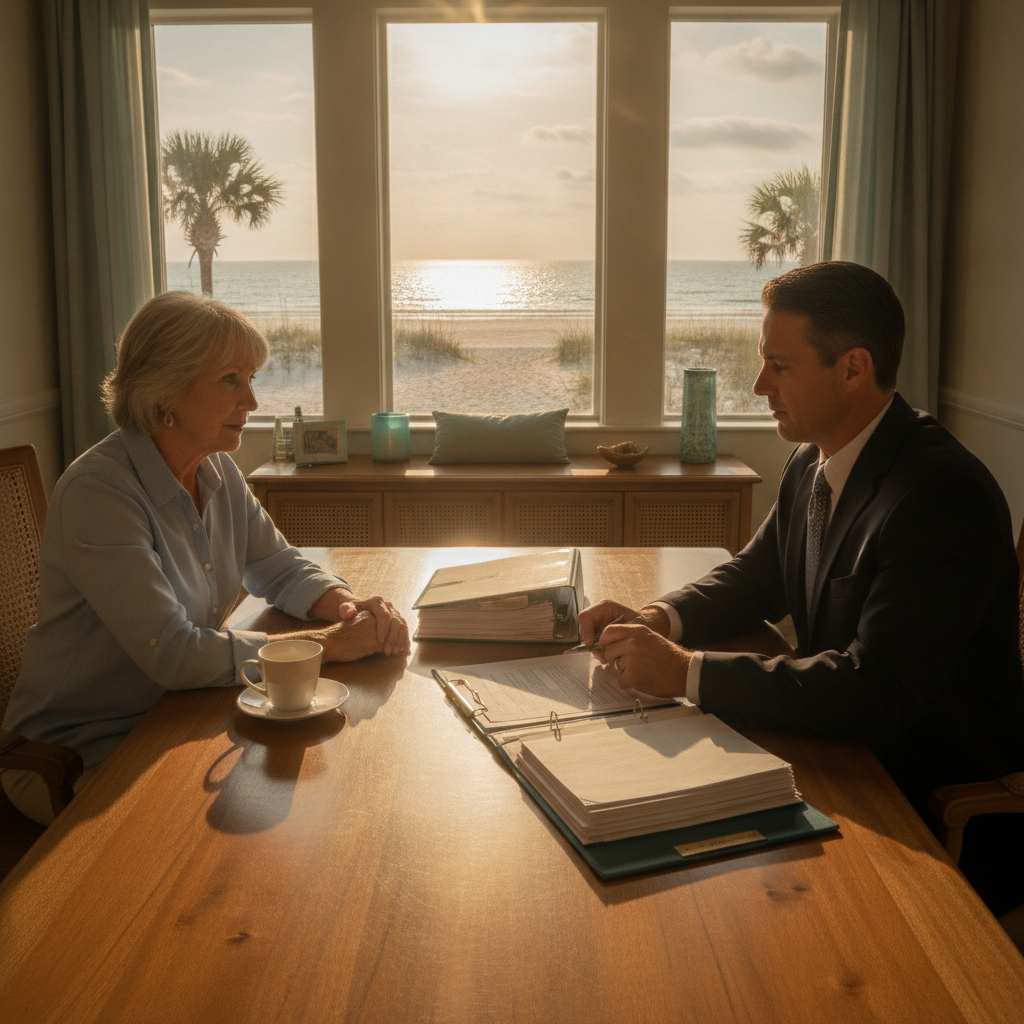
What Should Orange Beach and Gulf Coast Retirees Know About Updating Their Estate Plan After a Major Life Change?
If you created your estate plan years ago — maybe before you retired, before you moved to the Gulf Coast, or before your family situation changed — there’s a good chance your documents no longer reflect what you actually want. An estate plan isn’t a one-time task. It’s a living framework, and when your life shifts, your plan needs to shift with it. For retirees and snowbirds who’ve settled in Orange Beach or Baldwin County, those shifts happen more often than most people expect.
Why Life Changes Break Estate Plans That Once Worked Fine
Most estate plans are drafted with a specific snapshot of your life in mind — your family structure, your assets, your state of residence, and the people you trust. When any of those change significantly, the plan you built around that snapshot can develop serious gaps.
Some of the most common life changes that quietly invalidate or complicate an existing estate plan include:
- Relocating to Alabama from another state. If you moved to Orange Beach or Gulf Shores from Ohio, Tennessee, or anywhere else, your existing will and powers of attorney were drafted under a different state’s laws. Alabama has its own rules for execution, witness requirements, and probate. A document that was valid in your former state may still be honored here — but it may also create complications during probate that your family will have to sort out.
- Marriage or remarriage. This is particularly common among retirees along the Gulf Coast. Remarriage, especially in a blended family, raises immediate questions about what your new spouse inherits versus what passes to children from a prior relationship. Without updates, your existing documents may produce results that don’t reflect your intentions at all.
- Divorce or the death of a spouse. Alabama law does revoke certain provisions in a will after divorce — but not all estate planning documents are affected automatically. Beneficiary designations on retirement accounts and life insurance policies, for example, don’t change themselves. If your ex-spouse is still named on a 401(k) beneficiary form, that asset goes to them regardless of what your updated will says.
- A significant change in assets. Buying a waterfront property in Terry Cove or picking up a vacation rental near Romar Beach adds real estate to your estate that needs to be addressed. If you have a revocable living trust, property you acquire after the trust is created doesn’t automatically go into it — you have to transfer title.
- The death or incapacity of a named agent or trustee. If the person you named as your power of attorney agent, healthcare surrogate, executor, or trustee has died, moved away, or is no longer someone you’d choose, those designations need to be revisited immediately.
The Snowbird Problem: Multi-State Complexity That Most Local Attorneys Underaddress
One angle that gets surprisingly little attention from estate planning resources in this area is the specific challenge facing seasonal residents — people who split their year between, say, Pensacola or Orange Beach in the winter and Michigan or Illinois in the summer. If you’ve established Alabama as your primary domicile, that’s where your estate will be administered when you die. But if you still own property in your former home state, that out-of-state real estate may require a separate probate proceeding there — called ancillary probate — unless it’s been properly titled or placed into a trust.
That’s not a minor inconvenience. Ancillary probate means your family opens two separate probate cases in two different states, potentially with two different attorneys. A revocable living trust is often the most straightforward way to avoid this — but only if that out-of-state property is actually transferred into the trust.
If you’ve recently made the Gulf Coast your permanent home and still own property in another state, this is worth reviewing sooner rather than later.
What Documents Should You Actually Review — And How Often?
A complete estate plan typically includes a will, a durable power of attorney, a healthcare directive and healthcare proxy, and — for many retirees — a revocable living trust. Each of these serves a different purpose, and each is vulnerable to different kinds of obsolescence.
Here’s a practical framework for how often to review each piece:
- After any major life event: Anytime you marry, divorce, lose a spouse, move to a new state, buy significant property, or experience a major shift in your family structure, review all of your documents.
- Every three to five years as a baseline: Even without a triggering event, laws change, your financial picture shifts, and the people you’ve named as agents or beneficiaries may no longer be the right choice.
- Before and after hurricane season: This one is specific to the Gulf Coast. If something happened to you during a storm — you were injured, evacuated, or in the hospital — would your healthcare directive and power of attorney be current enough to give your family clear authority to act? This is exactly the kind of practical, coastal-specific concern worth addressing before June rolls around each year.
Reviewing your estate plan doesn’t have to be a heavy lift. For most clients, an annual check-in with an estate planning attorney takes less time than you’d expect and gives you real confidence that your documents still say what you want them to say.
The Risk of Relying on Old Documents — Or Doing It Yourself
Online document services have improved in recent years, but they still operate on a one-size-fits-all model that doesn’t account for Alabama-specific rules, your actual asset mix, or the particular dynamics of your family. If you have a blended family in Daphne, a vacation rental in Gulf Shores, and an IRA with a beneficiary designation that hasn’t been touched since 2009, a generic template isn’t going to catch the problems lurking in that combination.
The same applies to older documents drafted by a general-practice attorney who doesn’t regularly work in estate planning. Estate planning law moves. Medicaid rules change. Alabama courts have developed specific expectations around trust administration and probate procedure. Working with an attorney who focuses specifically on this area — and who understands the particular circumstances of Gulf Coast retirees and property owners — means your plan gets reviewed by someone who actually knows what to look for.
What Remarried Retirees in Baldwin County Need to Think About
Remarriage later in life is increasingly common along the Gulf Coast — and it creates estate planning questions that are genuinely more complicated than most people realize. If both spouses bring assets, prior children, and existing estate plans to a new marriage, those plans need to be reconciled deliberately. Without a clear structure in place, Alabama’s default rules may produce an outcome that neither spouse intended — and that none of the children are happy with either.
In some cases, a postnuptial agreement — or a prenuptial agreement before the wedding — is the right starting point. In others, the right answer is a trust structure that protects the surviving spouse while preserving assets for children from a prior marriage. Either way, remarriage is a clear trigger to revisit everything. You can learn more about how The Bales Lawfirm approaches these situations on the marital agreements page.
Frequently Asked Questions
Do I need a new will if I moved to Alabama from another state?
Not necessarily — Alabama will generally recognize a will that was validly executed under another state’s laws. But you should have it reviewed by an Alabama estate planning attorney to confirm it will hold up during probate and that it still reflects your current wishes and asset picture. Many relocating retirees find it cleaner to simply have new Alabama documents drafted.
Does Alabama automatically update my estate plan when I get divorced?
Alabama law revokes certain provisions in a will that benefit a former spouse after divorce, but this doesn’t apply to all documents. Beneficiary designations on retirement accounts, life insurance, and pay-on-death accounts are not automatically changed by divorce. You need to update those separately and promptly.
What happens if my named power of attorney agent dies before me?
If your agent dies and you haven’t named a successor, your power of attorney becomes ineffective. If you’re then incapacitated, a family member may need to go to court to obtain guardianship or conservatorship — a process that is far more time-consuming and costly than simply updating your document now.
How do I get property I acquired after creating my trust into the trust?
You need to formally transfer title of the new property into the trust. For real estate, that means executing a new deed that names the trust as owner and recording it with the county probate court. This is one of the most commonly missed steps in trust maintenance, especially when people pick up rental properties or vacation homes years after the trust was created.
How long does it take to update an estate plan?
For most clients doing a straightforward review and update — revising a will, refreshing powers of attorney, updating beneficiary designations — the process typically takes two to four weeks from the initial consultation to signed documents. More complex situations involving trust restructuring or multi-state coordination take longer, but most updates are faster than people expect.
Ready to Review Your Plan?
If your estate plan hasn’t been touched since before you moved to the Gulf Coast, since a marriage or divorce, or since you acquired property down here — it’s worth a conversation. The Bales Lawfirm works with Orange Beach and Baldwin County families, retirees, and snowbirds to make sure their plans actually hold up when it matters. Reach out through the contact page to schedule a consultation and find out exactly where your plan stands.