What Should Orange Beach and Gulf Coast Families Know About Using a Healthcare Directive to Guide Medical Decisions When They Can’t Speak for Themselves?
A healthcare directive — sometimes called a living will or advance directive — is a legal document that tells your doctors and your family exactly what kind of medical treatment you want if you become too sick or injured to communicate those wishes yourself. For families in Orange Beach and throughout Baldwin County, this document is one of the most quietly important pieces of a complete estate plan. And yet it’s also one of the most commonly skipped. Many people assume it’s a concern for the very old or terminally ill. It isn’t. A sudden accident, a stroke, a hurricane-season evacuation gone wrong — none of these events announce themselves in advance. That’s precisely why an advance directive needs to be in place before you need it.
What a Healthcare Directive Actually Does
An advance healthcare directive does two things in Alabama. First, it lets you record your specific wishes about end-of-life care — things like whether you want life-sustaining treatment if you’re in a persistent vegetative state, whether you want artificial nutrition and hydration, and what your preferences are around pain management and comfort care. Second, and equally important, it allows you to designate a healthcare proxy — a person legally authorized to make medical decisions on your behalf when you cannot make them yourself.
That second part is where most families run into trouble if the document doesn’t exist. Without a valid directive in place, a hospital may face conflicting instructions from multiple family members. Adult children may disagree with a spouse. A blended family situation — common among retirees who have remarried along the Gulf Coast — can become deeply contentious at an already impossible moment. The healthcare directive removes that conflict by putting your instructions in writing and identifying one clear decision-maker.
Alabama’s Natural Death Act governs how advance directives are executed and honored in this state. For the document to be legally valid here, it must be signed by you while you have legal capacity, witnessed by two adults who are not your heirs or healthcare providers, and — in most cases — notarized. A generic template downloaded from the internet may not meet Alabama’s specific execution requirements, which is one reason why working with a local attorney matters more than most people expect.
Why Gulf Coast Residents Face Unique Risks Without One
If you spend part of the year in Orange Beach and part of it somewhere else — say, the Midwest or the Northeast — you’re in a situation that adds real complexity to healthcare planning. Alabama’s advance directive may not automatically be recognized in your home state, and vice versa. If you’re hospitalized while you’re away, or if you’re in Alabama during hurricane season and your primary physician is elsewhere, that gap in cross-state recognition can create serious problems for your family.
Snowbirds and seasonal residents who own waterfront property or vacation rentals along the coast often believe that their documents from another state will cover them here. Sometimes they do. But Alabama hospitals and healthcare providers aren’t obligated to honor an out-of-state directive if it doesn’t meet Alabama’s standards. The safest approach is to have directives that comply with both states’ requirements — or to work with an attorney who understands how to coordinate the two.
There’s also the hurricane factor. Coastal Alabama families know that emergency evacuations, storm-related injuries, and temporary displacement to unfamiliar hospitals happen. Having your healthcare directive stored in an accessible location — and making sure your healthcare proxy actually has a copy — is part of responsible hurricane preparedness, not just estate planning. A complete estate plan for Gulf Coast families should address all of this together.
The Gap Most Attorneys Don’t Fill: Having the Conversation Behind the Document
Here’s where a meaningful gap exists in how many local and regional firms approach this topic. Most attorneys will help you sign a healthcare directive — but they don’t walk you through the conversation you need to have with your healthcare proxy afterward. Naming someone is only half the job. That person needs to know where the document is, understand your specific values around medical intervention, and feel genuinely prepared to act under pressure.
Your healthcare proxy should know the answers to questions like: Do you want all available interventions attempted if there’s any chance of recovery, or do you prioritize quality of life over longevity? What does “meaningful recovery” mean to you personally? Are there specific religious or cultural values that should guide treatment decisions? These aren’t questions your attorney can answer for you. But an attorney who takes this seriously will prompt you to think them through — and will draft a directive detailed enough to actually reflect your answers.
At The Bales Lawfirm, we treat the healthcare directive as a document that should do real work — not just check a legal box.
How a Healthcare Directive Fits Into Your Broader Estate Plan
A healthcare directive works alongside your durable power of attorney (which covers financial decisions), your will or trust, and your HIPAA authorization. These documents form a connected system, and a gap in any one of them can affect how the others function. If your healthcare proxy can’t access your medical records because you don’t have a HIPAA release in place, they may be operating blind. If your financial power of attorney and your healthcare proxy are different people who aren’t communicating, family friction can escalate quickly.
For families in Fairhope, Daphne, Gulf Shores, Foley, and the broader Baldwin County area, we regularly help clients build estate plans where all of these documents work in sync. Whether you’re a year-round resident, a part-time retiree, or someone who recently relocated to the coast, the goal is the same: your wishes should be clear, your chosen people should know what to do, and nothing should be left to guesswork.
If you’ve already created a will or trust but haven’t addressed your healthcare directive yet, that’s the next conversation to have.
What to Expect When You Work With an Estate Planning Attorney on This
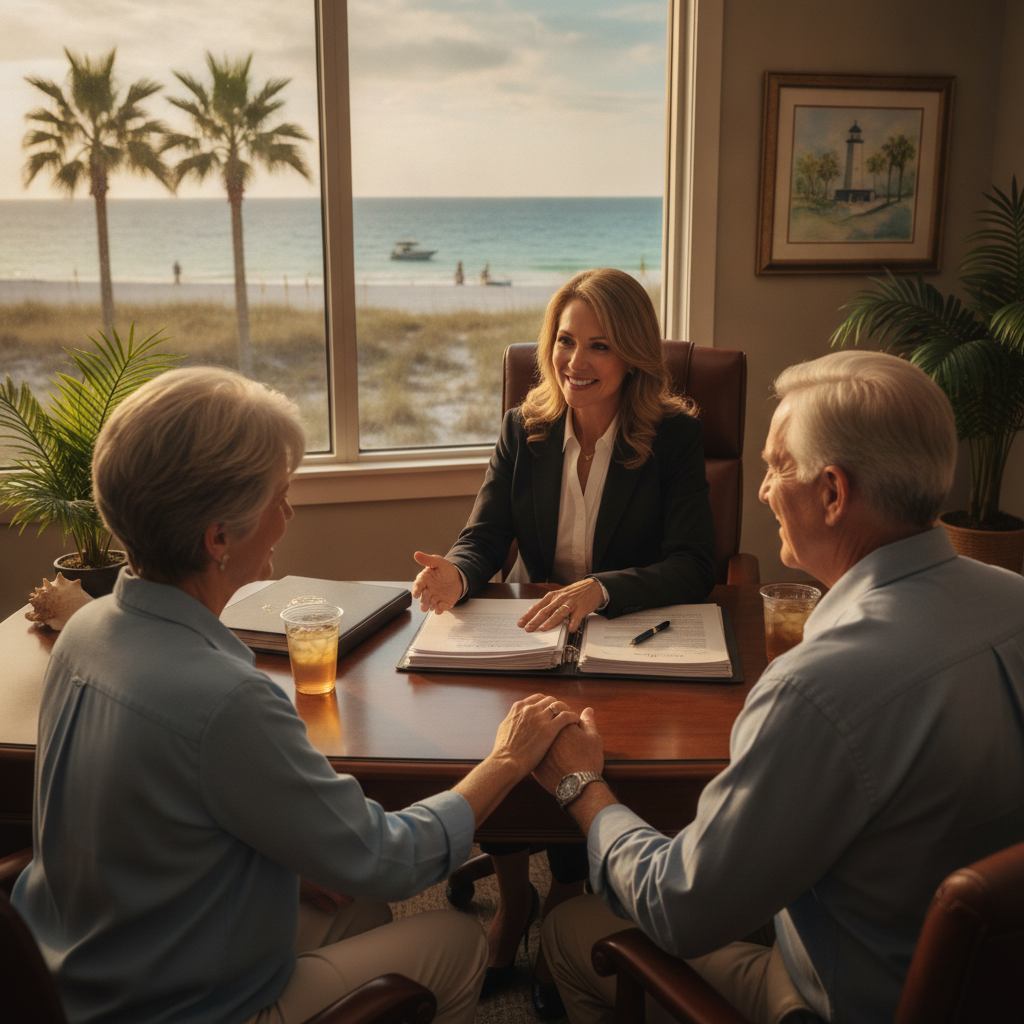
The process of creating a healthcare directive with an attorney is usually straightforward, and it doesn’t need to be expensive or time-consuming. You’ll discuss your medical preferences in plain language, identify who you trust to serve as your healthcare proxy, and walk through any specific scenarios you want addressed. The attorney will draft the document to meet Alabama’s legal requirements and help you understand how it interacts with the rest of your plan.
Timeline-wise, this can typically be completed in one or two appointments. If you’re also creating or updating a will, trust, or power of attorney at the same time — which most clients do — it can be addressed as part of a single, coordinated planning session. If you’re a snowbird with ties to Pensacola or another state, let your attorney know upfront so they can flag any coordination issues before they become problems.
Frequently Asked Questions
Does Alabama have a specific form for a healthcare directive?
Alabama law provides a suggested form under the Natural Death Act, but it’s not the only format that works. What matters is that the document meets the state’s execution requirements — proper signatures, two qualified witnesses, and notarization. An attorney can draft a directive that goes beyond the standard form to reflect more specific wishes.
Who should I name as my healthcare proxy in Orange Beach or Baldwin County?
Choose someone you trust completely to carry out your wishes — even if those wishes are hard. It should be someone who can stay calm under pressure, communicate clearly with medical staff, and set aside their own feelings about your medical situation to honor yours. This doesn’t have to be a family member, though it often is.
What happens if I don’t have a healthcare directive and I’m incapacitated in Alabama?
Alabama law has a default hierarchy of people who can make medical decisions for you, starting with a spouse, then adult children, then parents, and so on. But this process can be slow, contentious, and may not reflect what you actually want — especially in blended family situations. A healthcare directive eliminates that uncertainty.
Will my Alabama healthcare directive be honored if I’m hospitalized in Florida or another state?
It depends. Many states extend recognition to out-of-state directives if they’re substantially compliant with that state’s law. But “substantially compliant” can be interpreted differently, and hospitals aren’t always required to honor them. If you spend significant time in another state — like Florida — it’s worth having state-compliant directives for both.
Do I need to update my healthcare directive after I create it?
Not necessarily, but review it whenever your health situation changes significantly, after a major life event like remarriage, or if your chosen healthcare proxy is no longer someone you’d want in that role. Many families along the Gulf Coast revisit their full estate plan every three to five years as part of regular maintenance.
Ready to Put Your Healthcare Wishes in Writing?
If you don’t have a healthcare directive — or if you have one from another state that may not hold up in Alabama — this is worth addressing now rather than later. At The Bales Lawfirm, we help families throughout Orange Beach, Gulf Shores, Fairhope, Daphne, Foley, and the surrounding Gulf Coast put complete estate plans in place that actually work when they’re needed most. Reach out to schedule a consultation and let’s make sure your wishes are protected — in writing, in the right form, and in the hands of the right people.