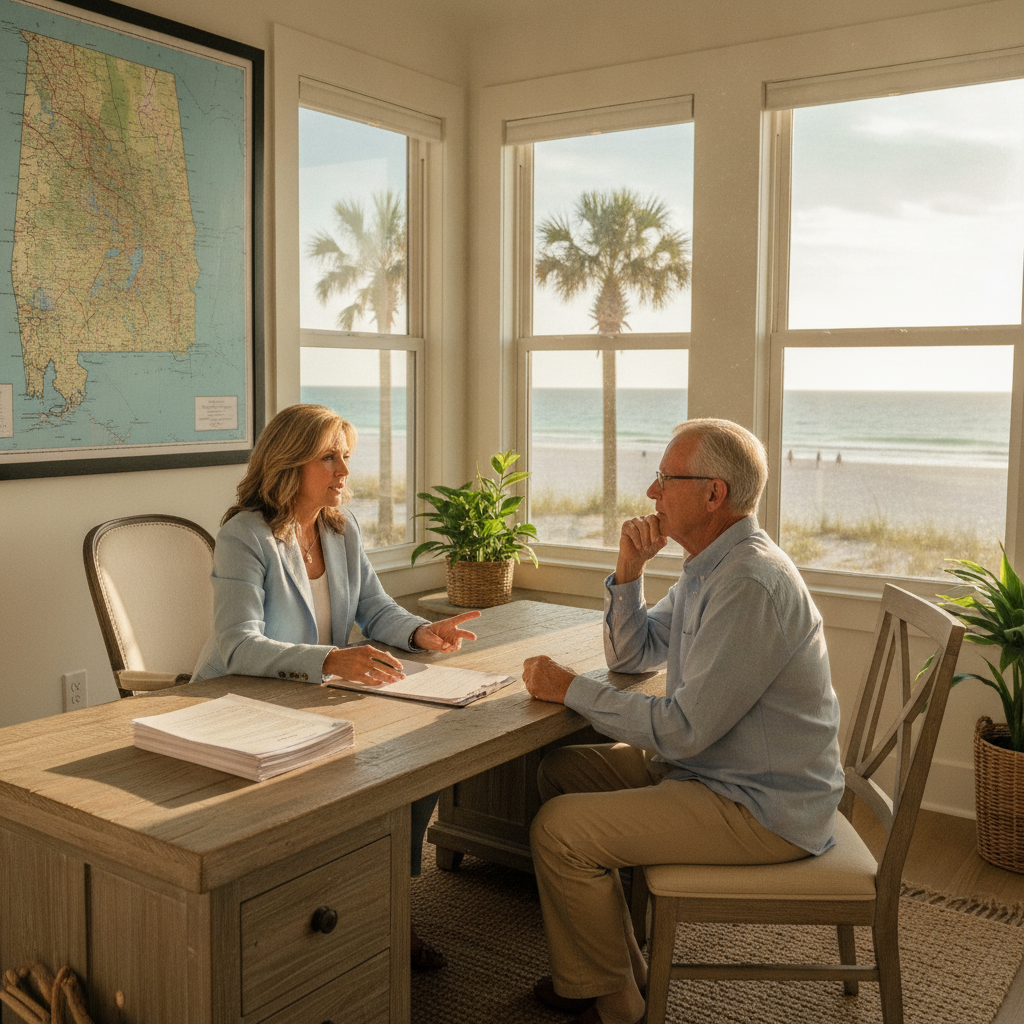
What Should Loxley and Baldwin County Families Know About Using a Beneficiary Deed to Pass Alabama Real Estate Without Probate?
If you own real estate in Baldwin County — whether it’s a primary home in Loxley, a rental cottage near Gulf Shores, or a few acres outside Elberta — a beneficiary deed can allow that property to pass directly to your chosen heirs the moment you die, with no court process required. Alabama formally recognizes this tool, and for some families it’s a practical, low-cost way to keep real estate out of probate. But it isn’t a one-size-fits-all solution, and it’s frequently misunderstood — or simply left out of the conversation by attorneys who aren’t focused on estate planning. Here’s what you need to know before deciding whether a beneficiary deed belongs in your plan.
What Is a Beneficiary Deed and How Does It Work in Alabama?
A beneficiary deed — sometimes called a transfer-on-death deed — is a legal document that names who will inherit a specific piece of real estate when you die. You record the deed with the probate court in the county where the property sits, but you keep full ownership and control of the property during your lifetime. You can sell it, refinance it, rent it, or revoke the deed entirely without needing your beneficiary’s permission or involvement.
When you pass away, the named beneficiary records a simple affidavit of survivorship along with a copy of your death certificate. The property transfers outside of probate — no court filing, no waiting period, no judge required. For a family in Loxley or Robertsdale trying to pass a home to an adult child without a drawn-out probate proceeding, that directness is genuinely useful.
Alabama’s version of this deed is governed by the Alabama Uniform Real Property Transfer on Death Act, which gives the tool a clear statutory foundation. That’s worth noting because not every state has a comparable law — which matters when you’re part of a snowbird household split between Baldwin County and a northern state.
When a Beneficiary Deed Makes Sense — and When It Doesn’t
The honest answer is that a beneficiary deed is a solid tool in some situations and an incomplete one in others. It works well when:
- You have a single property and a clear, uncomplicated beneficiary designation
- The beneficiary is an adult with no creditor issues or government benefit concerns
- You don’t need the property to be managed or held in trust if the beneficiary is young, incapacitated, or has a complicated financial situation
- You want a simple, recordable document that doesn’t require transferring title now
It becomes less reliable when:
- Your named beneficiary dies before you do and you haven’t updated the deed
- You own the property jointly with a spouse and assume the deed handles everything — it may not operate the way you expect depending on how title is held
- You have multiple properties in different counties or states, requiring coordinated planning rather than a single document fix
- Medicaid planning is a concern — a beneficiary deed does not automatically shield the property from Medicaid estate recovery in Alabama
- You want to control how and when a beneficiary can access the property, or protect it from their creditors after your death
For many Gulf Coast families with rising property values, vacation rentals, or blended-family dynamics, a beneficiary deed addresses one piece of the puzzle without necessarily solving the whole picture. That’s where a broader estate planning conversation becomes important.
What Competitors Are Missing: The Medicaid and Creditor Recovery Gap
Most general-practice attorneys and online estate planning tools that mention beneficiary deeds stop at the probate-avoidance benefit. What they rarely explain — and what Baldwin County families in particular need to understand — is how Alabama’s Medicaid estate recovery program can still reach property transferred through a beneficiary deed.
If you received Medicaid benefits at any point and die with a beneficiary deed on file, Alabama may have a claim against the value of that property as part of the estate recovery process. The mechanics of when that claim applies and how it interacts with your deed can vary based on your specific circumstances, but the bottom line is this: a beneficiary deed does not automatically put property out of reach of every post-death claim. Families who assume the deed is a complete shield can end up with an unexpected complication at exactly the wrong moment.
If Medicaid planning is even a remote possibility — and for many retirees along the Gulf Coast it is — talk to an attorney before relying solely on a beneficiary deed. There are trust structures and other planning strategies that address this more comprehensively. You can learn more about how those tools fit together on our wills and trusts page.
Beneficiary Deeds and Coastal Property: A Few Extra Considerations
Property values along the Gulf Coast have climbed sharply in recent years. A home in Fairhope or a waterfront lot in Spanish Fort that was worth $250,000 a decade ago may be appraised significantly higher today. That increase in value raises the stakes around how you pass real estate — and it’s one reason why a conversation about beneficiary deeds in this area involves more nuance than it might elsewhere.
A few factors worth raising with your attorney:
- Multiple beneficiaries on one deed: If you name more than one person, they inherit as tenants in common. That means co-ownership without a built-in buyout or management plan — which can create friction, especially with vacation or rental property.
- Out-of-state beneficiaries: Many Gulf Coast property owners have adult children living in other states. The transfer itself can still be straightforward, but out-of-state heirs may face their own tax and title considerations depending on where they live.
- Property with a mortgage: A beneficiary deed does not eliminate an existing mortgage. The beneficiary inherits the property subject to whatever debt remains — and may need to qualify for refinancing or arrange a payoff.
- Hurricane and disaster preparedness: If you spend time away from your Gulf Coast property during storm season, keeping your deed and property documents organized and accessible — and ensuring your plan is current — is simply good practice.
Is a Beneficiary Deed Better Than a Living Trust for Real Estate?
For some people, yes. For others, a revocable living trust is the stronger tool. A trust lets you pass all of your assets — not just real estate — outside of probate, name a successor trustee to manage things if you’re incapacitated before death, add conditions and protections for beneficiaries, and coordinate multi-state property ownership cleanly. A beneficiary deed is simpler and less expensive to set up, but it only covers the specific property listed and doesn’t carry the same flexibility.
The right answer depends on the size of your estate, how many properties you own, your family situation, and your goals. An attorney who focuses specifically on estate planning — rather than a general practitioner handling it as a side service — will help you evaluate both options honestly rather than defaulting to one approach.
Frequently Asked Questions: Beneficiary Deeds in Baldwin County
Does a beneficiary deed override my will in Alabama?
Yes. If you have a beneficiary deed recorded on a property, that deed controls who inherits it — regardless of what your will says about that property. The two documents should be coordinated as part of a complete plan.
Can I change or revoke a beneficiary deed after I record it?
Yes. You can revoke or update a beneficiary deed at any time during your life by recording a new deed or a revocation document with the county probate court where the property is located. The deed only becomes irrevocable at your death.
Does a beneficiary deed protect my property from nursing home costs or Medicaid recovery?
Not on its own. A beneficiary deed avoids probate, but Alabama’s Medicaid estate recovery program may still have a claim against the property’s value depending on your circumstances. If this is a concern, speak with an estate planning attorney before relying on a deed alone.
What happens if my named beneficiary dies before I do?
If you haven’t updated the deed or named an alternate beneficiary, the property may fall back into your probate estate when you die. This is one of the most common oversights with beneficiary deeds and one of the strongest arguments for reviewing your documents regularly.
Do I need an attorney to prepare a beneficiary deed in Alabama?
Technically, no — but the deed must be drafted and recorded correctly to be valid, and errors in how the property is described or how title is held can create real problems for your heirs. For most families, the cost of having an attorney prepare it properly is minor compared to the risk of a drafting mistake that clouds title or defeats the purpose of the deed.
Talk to The Bales Lawfirm About Your Property and Your Plan
A beneficiary deed can be a smart, efficient part of an estate plan — but it works best when it’s intentionally coordinated with the rest of your documents, not treated as a standalone solution. Whether you’re a longtime Loxley resident, a retiree with a Gulf Shores condo, or a Fairhope family figuring out how to pass real estate to the next generation cleanly, The Bales Lawfirm can help you understand your options and make a decision that actually fits your situation.
We serve families and property owners across Baldwin County and the greater Gulf Coast area with focused, practical guidance on estate planning, probate, and asset protection — not generic one-size-fits-all answers. Reach out to schedule a consultation and let’s talk about what makes sense for your property, your family, and your goals.