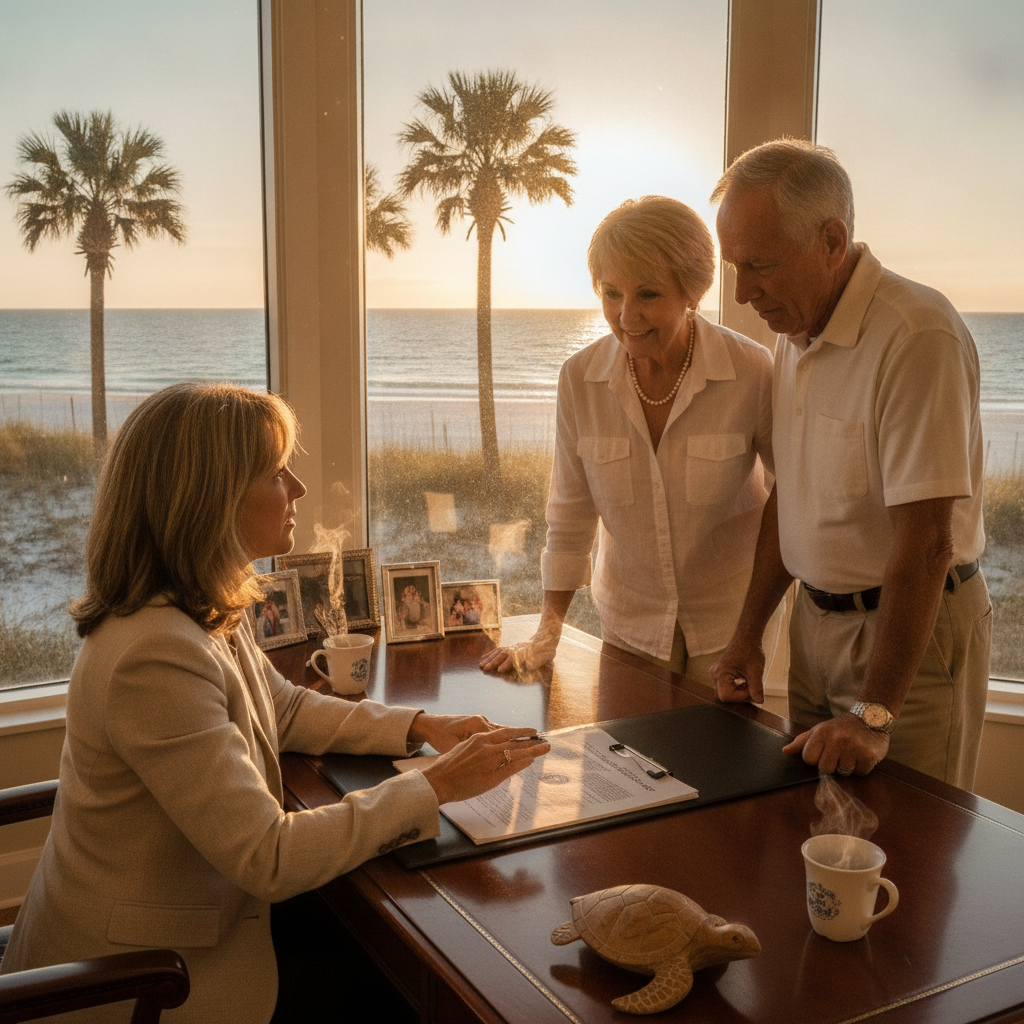
What Should Perdido Key and Gulf Coast Families Know About Using a Lady Bird Deed to Transfer Property Without Probate in Alabama?
A Lady Bird deed — sometimes called an enhanced life estate deed — lets you keep complete control of your property while you are alive, then passes it directly to your named beneficiaries the moment you die, without any probate court involvement. For families who own waterfront homes, vacation rentals, or coastal property near Perdido Key, Orange Beach, or anywhere along the Gulf Coast, this single document can eliminate months of court delays and thousands of dollars in probate costs for the people you leave behind. It is not widely discussed by general-practice attorneys in this area, and several competing local firms barely mention it on their websites — which is a real gap, because it is one of the most practical estate planning tools available to Alabama property owners.
What Makes a Lady Bird Deed Different From a Regular Life Estate Deed?
Most people who have heard of a life estate deed understand the basic idea: you transfer property now, reserve the right to live there during your lifetime, and the named beneficiary inherits automatically when you die. The problem with a traditional life estate deed is that once it is recorded, you have largely given up control. You cannot sell the property, refinance it, or change your mind about who inherits it without the beneficiary’s written consent. That lack of flexibility makes traditional life estate deeds a poor fit for many Gulf Coast families, especially those whose circumstances are likely to change — remarried retirees, snowbirds who may want to sell before they die, or vacation rental owners who need the freedom to manage and mortgage their property.
A Lady Bird deed adds one critical feature: you retain the full power to revoke, sell, mortgage, or otherwise deal with the property during your lifetime without asking permission from anyone. The beneficiary designation only becomes effective at your death, and until then you are in complete control. That combination — automatic transfer at death plus full lifetime flexibility — is what makes it genuinely useful.
Why This Matters for Gulf Coast Property Owners Specifically
Coastal Alabama property has become significantly more valuable over the past decade. A beach cottage near Perdido Key or a condo on Ono Island that a family bought years ago may now be worth several hundred thousand dollars or more. When property like that goes through probate, the process is public, time-consuming, and expensive — and the value of the property only increases what creditors and claimants may try to reach during that period.
Families who own vacation rentals face a particular challenge. If a rental property sits in probate for six months or longer while the estate is being administered, rental income may be disrupted, bookings may fall through, and the property may fall into disrepair if no one has clear legal authority to manage it. A Lady Bird deed eliminates that uncertainty by making the transfer automatic and immediate at death — the new owner steps in without any court process.
For snowbirds who own property in both Alabama and another state, a Lady Bird deed on the Alabama property can also reduce the need for ancillary probate proceedings. If you live in Ohio and own a Gulf Shores condo, your estate would typically have to go through probate in both states. Removing the Alabama property from your probate estate through a Lady Bird deed eliminates that second proceeding entirely.
The Medicaid Connection: A Gap Most Local Firms Are Not Addressing
One of the most practical — and least discussed — benefits of the Lady Bird deed in this region relates to Medicaid planning. If a Gulf Coast retiree eventually needs nursing home care and applies for Alabama Medicaid, the state has the right to seek reimbursement from the deceased applicant’s estate for the cost of that care. This is called Medicaid estate recovery, and it can effectively consume a home that the applicant intended to leave to their children.
Because a Lady Bird deed passes property outside of probate, the home generally does not become part of the probate estate subject to Medicaid’s recovery claim. The property transfers directly to the beneficiaries without going through the estate administration process that Medicaid’s recovery program targets. This is a meaningful protection for families in Foley, Gulf Shores, and throughout Baldwin County who have an aging parent in a waterfront home they hope to keep in the family.
It is worth noting that this strategy works best when it is part of a broader estate plan that accounts for your full financial picture, including whether the home is your primary residence, whether you have a spouse, and what other assets are involved. This is not a one-document fix for every situation — it needs to fit correctly into the larger plan.
What a Lady Bird Deed Cannot Do
A Lady Bird deed is a targeted tool, not a complete estate plan. It only covers the specific property named in the deed. Your bank accounts, investment accounts, vehicles, personal property, and any other real estate you own are not affected by it. Those assets still need a plan — whether that means beneficiary designations, a revocable living trust, or a will. If you have a waterfront home in Orange Beach, a boat, a business, and several financial accounts, a Lady Bird deed handles one piece of a larger puzzle.
It also does not protect property from your own creditors during your lifetime. If you incur significant debts or face a lawsuit while you are alive, your property is still reachable. The probate-avoidance benefit operates at death, not before. For families who need broader asset protection during their lifetimes, additional planning — such as an LLC or trust structure — may be appropriate. You can explore those options on our asset protection page.
What to Expect When Setting One Up
Creating a Lady Bird deed involves drafting a deed that meets Alabama’s formal requirements, clearly naming your beneficiaries, and recording it in the county where the property is located — typically Baldwin County or Escambia County for Gulf Coast property owners. The process is straightforward when done by an attorney who works with Alabama real property regularly, but errors in drafting — wrong legal descriptions, ambiguous beneficiary language, or improper execution — can create title problems that take years and significant legal expense to untangle.
Online deed generators and national legal document platforms do not reliably account for Alabama-specific requirements, and they cannot advise you on whether a Lady Bird deed is the right choice for your situation or how it interacts with your broader estate plan. A local attorney who understands Gulf Coast property ownership, seasonal and snowbird dynamics, and Alabama law is simply better positioned to get this right.
Frequently Asked Questions
Is a Lady Bird deed recognized under Alabama law?
Alabama does recognize enhanced life estate deeds, though they are not specifically defined by statute the way they are in some other states. Proper drafting under Alabama property law is essential to ensure the deed accomplishes what you intend and does not create title defects.
Can I use a Lady Bird deed if my property has a mortgage?
Generally yes. Because you retain full ownership and control during your lifetime, recording a Lady Bird deed typically does not trigger the due-on-sale clause in a mortgage. You should still confirm this with your lender and your attorney before proceeding.
What happens if I want to sell the property after recording a Lady Bird deed?
You can sell the property without the beneficiary’s consent. The enhanced life estate deed reserves that right to you explicitly. The deed simply becomes void as to that property once you sell it, and the proceeds are yours to use as you choose.
Can I name multiple beneficiaries on a Lady Bird deed?
Yes. You can name multiple beneficiaries, and the property would pass to them in equal shares unless the deed specifies otherwise. If your situation involves multiple heirs, it is worth thinking through how they will co-own and manage the property after your death — particularly if it is a vacation rental — before finalizing the deed language.
Does a Lady Bird deed replace a will or trust?
No. It handles only the property named in the deed. Everything else in your estate still needs a plan. Many Gulf Coast families use a Lady Bird deed in combination with a will or revocable living trust to make sure all of their assets transfer efficiently and according to their wishes.
Ready to Find Out If a Lady Bird Deed Is Right for Your Situation?
If you own property along the Gulf Coast — in Perdido Key, Orange Beach, Ono Island, or anywhere in Baldwin County — and you want a straightforward way to pass it to your family without putting them through probate, a Lady Bird deed may be exactly what you need. The Bales Lawfirm works with coastal Alabama families, retirees, and property owners on precisely these kinds of questions every day. We can help you understand whether this tool fits your situation, how it works with your existing plan, and what steps to take next. Contact us to schedule a consultation and let us take a clear-eyed look at your property and your goals together.