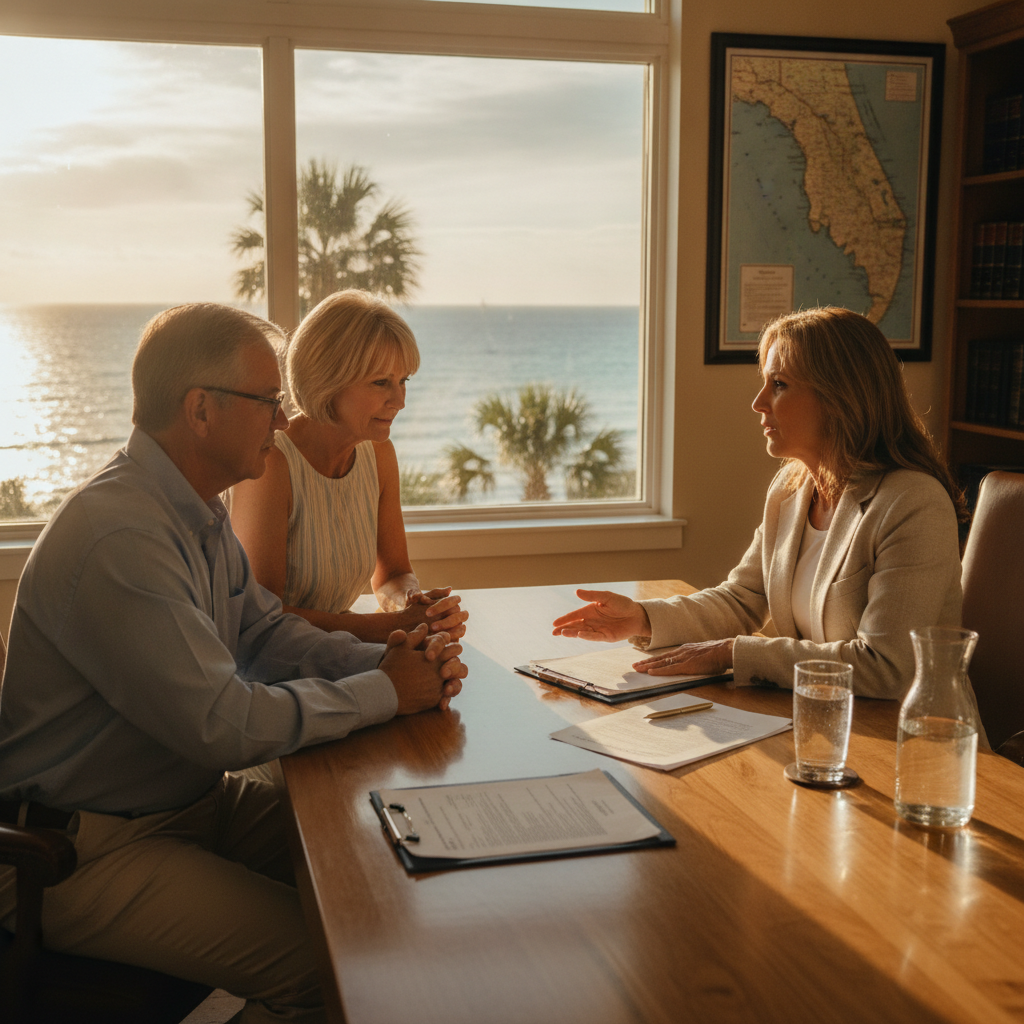
What Should Pensacola and Gulf Coast Families Know About Using a Durable Power of Attorney in Alabama?
A durable power of attorney gives someone you trust the legal authority to manage your finances, property, and legal matters if you become unable to do so yourself. For families along the Gulf Coast — from Orange Beach and Gulf Shores to Fairhope, Daphne, and across the state line into Pensacola — this document can be the difference between a smooth, private transition and a costly court-supervised guardianship. It’s one of the most important documents in any solid estate plan, and yet it’s one of the most commonly misunderstood or skipped over entirely.
What Makes a Power of Attorney “Durable” in Alabama?
In Alabama, a standard power of attorney becomes void the moment you lose mental capacity — which is exactly when you need it most. A durable power of attorney is specifically written to remain in effect even if you become incapacitated. That single word — durable — changes everything about how the document functions.
Alabama’s Uniform Power of Attorney Act, which has governed these documents since 2012, sets specific requirements for how a durable power of attorney must be signed, witnessed, and notarized to be legally enforceable. A document that doesn’t meet these requirements won’t hold up when your bank, your financial advisor, or a court examines it. That’s not a hypothetical problem — it’s one that families discover in real time, during a medical crisis, when fixing it is no longer an option.
Who Needs a Durable Power of Attorney Along the Gulf Coast?
The honest answer is almost everyone — but certain situations make it especially urgent for Gulf Coast and coastal Alabama residents.
- Retirees and older residents who want a trusted family member or friend to manage finances, real estate transactions, or business matters without court involvement if health declines
- Snowbirds and seasonal residents who split time between Alabama and states like Florida, Tennessee, or Ohio and need a document that clearly governs their Alabama-held assets — including waterfront homes, condos, and vacation rentals
- Vacation rental and waterfront property owners who want someone to legally manage lease agreements, maintenance contracts, or property transactions if they’re incapacitated or simply unavailable
- Small business owners in Foley, Fairhope, or along the Baldwin County coast who need a designated agent to sign contracts, make payroll decisions, or handle banking without shutting the business down
- Spouses in blended families who may not have legal authority to manage each other’s separate property without a properly executed document in place
Hurricane season is also a real driver along the Gulf Coast. When a major storm forces evacuation or causes serious injury, decisions about property, insurance claims, contractor agreements, and banking can’t wait. A durable power of attorney ensures someone has the legal authority to act immediately — without filing anything in probate court.
What Authority Does a Durable Power of Attorney Actually Grant?
The scope of authority in a durable power of attorney is not one-size-fits-all. Alabama law allows you to grant broad, general authority — covering everything from banking and real estate to business operations and tax filings — or narrower, limited authority for specific transactions. The document can be written to take effect immediately or only upon your incapacity (called a “springing” power of attorney).
What your agent can and cannot do depends entirely on what the document says. A well-drafted durable power of attorney will address:
- Financial accounts and banking transactions
- Real estate — buying, selling, managing, or refinancing property
- Tax matters and filings
- Business operations and contracts
- Insurance claims and benefit management
- Gifts and estate planning transactions (if explicitly authorized)
It’s worth noting that a durable power of attorney does not grant authority over healthcare decisions. That’s handled by a separate document — a healthcare directive or healthcare proxy. If you want both financial and medical decisions covered, you need both. A coordinated estate plan addresses all of these together.
Why Generic Online Forms Fall Short for Gulf Coast Situations
Downloadable power of attorney forms are widely available, and many people assume a notarized signature is all it takes. But a form written for a general audience rarely accounts for the specific situations Gulf Coast families actually face.
Consider a Pensacola-area snowbird who owns a condo in Orange Beach and a home in Ohio. A generic Alabama form won’t address how out-of-state financial institutions handle the document, what happens when Alabama and Ohio laws interact, or whether the agent has clear authority to manage vacation rental income. Banks and title companies routinely reject powers of attorney that don’t meet their internal standards — even documents that are technically valid under Alabama law.
Similarly, a small business owner in Gulf Shores needs agent authority that explicitly covers business operations. A generic personal finance form won’t get there. And if the document doesn’t include gift-giving authority written in a specific way, your agent may not be able to continue the estate planning transfers you intended.
When a document fails at the moment it’s needed, the alternative is a court-supervised conservatorship — a public, slow, and expensive process that a properly drafted power of attorney was designed to avoid entirely.
Choosing the Right Agent: What Gulf Coast Families Should Consider
Your agent — sometimes called an attorney-in-fact — has significant authority over your financial life. Choosing the right person matters as much as drafting the document correctly.
Practical considerations for Gulf Coast families include whether your agent lives nearby or can get to Orange Beach or Fairhope when needed, whether they’re familiar with managing property or business interests, and whether they’re comfortable working with banks, tenants, or contractors on your behalf. You can also name a successor agent in case your first choice is unavailable.
It’s also worth considering whether your agent is in a different state. If you’re a snowbird with property in both Alabama and Florida, an agent based in Pensacola or Escambia County may need to interact with Alabama institutions and courts. Making sure they understand the scope of their role — and that the document is drafted to give them the authority they’ll actually need — is part of getting this right. Pairing a power of attorney with a trust structure can also reduce the burden on your agent by keeping major assets outside the need for active management.
Frequently Asked Questions
Does a power of attorney expire in Alabama?
Not automatically. A durable power of attorney remains in effect until you revoke it, until you die (at which point the authority ends and your will or trust governs), or until a court invalidates it. Some documents include an expiration date, but most general estate planning powers of attorney are written to be ongoing.
Can I revoke a durable power of attorney once it’s signed?
Yes, as long as you have mental capacity. Revocation should be done in writing and, in many cases, delivered directly to anyone who may rely on the existing document — including banks and financial institutions. Simply telling your agent you’ve changed your mind is not sufficient.
Will my Alabama power of attorney be accepted in Florida?
It may be, but it’s not guaranteed. Florida has its own statutory requirements for powers of attorney, and some Florida institutions may require a document that meets Florida law. Snowbirds and seasonal residents with assets or activities on both sides of the state line should discuss multi-state planning with an attorney who understands both jurisdictions.
What happens if I become incapacitated and don’t have a durable power of attorney?
Without one, a family member who wants to manage your finances must petition the Alabama probate court for a conservatorship. That process is public, can take months, requires ongoing court supervision, and costs significantly more than having a power of attorney drafted in advance.
Is a durable power of attorney the same as a healthcare directive?
No. A durable power of attorney typically covers financial and legal decisions. A healthcare directive — sometimes called a healthcare proxy or medical power of attorney — designates someone to make medical decisions and outlines your treatment preferences. Both are separate documents, and a complete estate plan includes both.
Get Your Documents Right Before You Need Them
A durable power of attorney isn’t something you put together during a health crisis — it has to be in place before one happens. For Gulf Coast families, retirees, snowbirds, and business owners along the Alabama and Pensacola corridor, this document is a core piece of financial and personal protection that shouldn’t be left to a generic form or put off indefinitely.
At The Bales Lawfirm in Orange Beach, we work with coastal Alabama families to build estate plans that actually reflect how they live — including the right powers of attorney, healthcare directives, and supporting documents to protect them when it matters most. If you’d like to talk through your situation, reach out to schedule a consultation. We’re here to give you straightforward answers and practical documents that work.