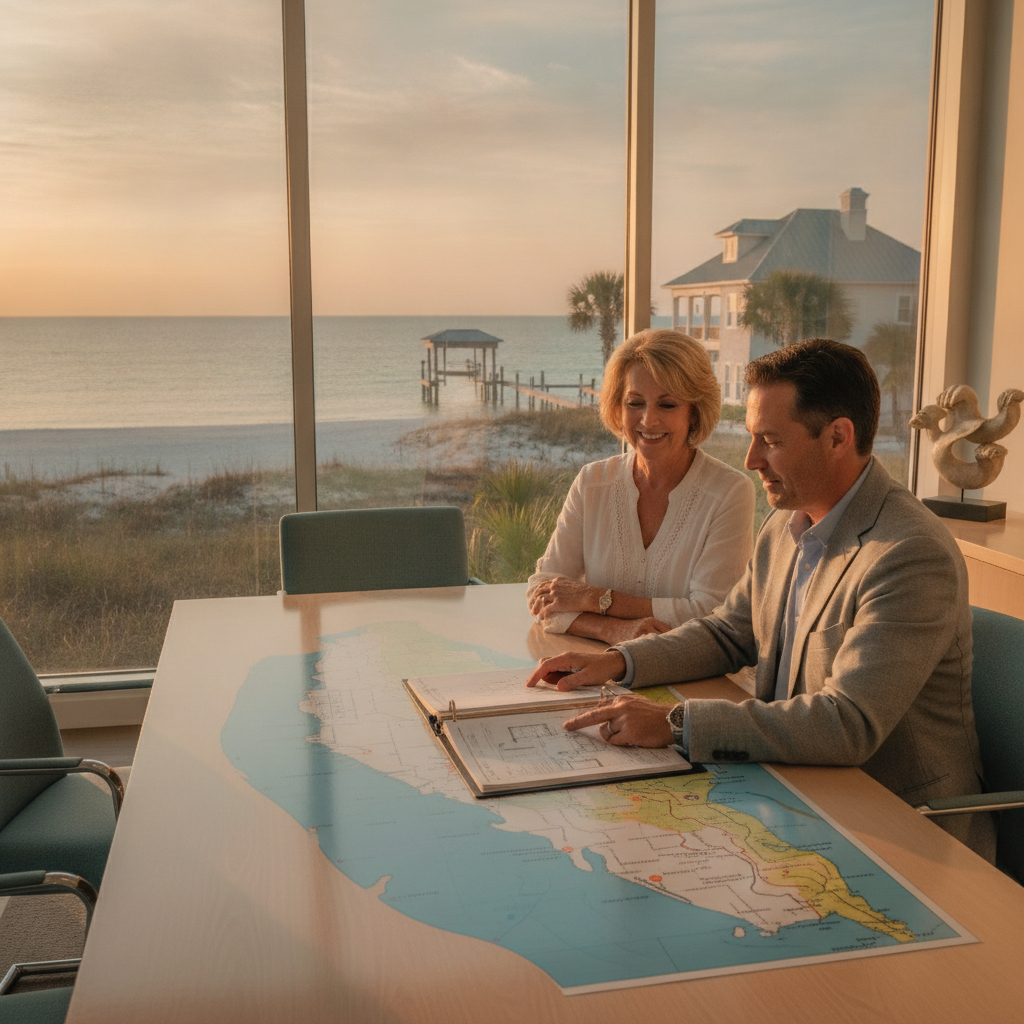
What Should Ono Island and Orange Beach Families Know About Using a Revocable Living Trust to Avoid Probate in Alabama?
If you own property on Ono Island, along Terry Cove, or anywhere else in the Orange Beach area, a revocable living trust is likely the most effective tool you have for transferring that property to your family without dragging them through the Alabama probate process. A revocable living trust lets you keep full control of your assets during your lifetime, name a successor trustee to step in when you can’t, and pass everything directly to your beneficiaries when you die — no probate required, no court approval, no public record. For Gulf Coast families with waterfront homes, vacation rentals, or property spanning multiple states, that matters a great deal.
What a Revocable Living Trust Actually Does — and What It Doesn’t
A revocable living trust is a legal document you create during your lifetime. You transfer ownership of your assets into the trust — your home, your rental property, your bank accounts, whatever you choose — and you act as your own trustee while you’re alive and capable. You can change the trust, revoke it entirely, or move assets in and out at any time. Nothing changes about how you use or enjoy your property.
When you die — or if you become incapacitated — the successor trustee you named steps in automatically. That person distributes your assets according to your instructions without filing anything in probate court. For families with property in the Romar Beach or Cotton Bayou areas, that means your heirs aren’t waiting months for court approval before they can sell, rent, or occupy a property that may carry real carrying costs in the meantime.
What a revocable living trust does not do is protect your assets from creditors while you’re alive. Because you retain full control, the trust is transparent to creditors during your lifetime. It also doesn’t eliminate the need for a will entirely — you’ll still want what’s called a pour-over will to catch any assets that weren’t transferred into the trust during your life. Think of the trust as your primary vehicle and the will as a safety net.
Why This Matters More on the Gulf Coast Than Most Places Realize
Coastal Alabama has some specific dynamics that make probate particularly painful for families who haven’t planned around it. Baldwin County property values have climbed significantly over the past decade, and waterfront or vacation-rental properties often represent the bulk of a family’s estate. When that property has to pass through probate, the process becomes public — meaning anyone can look up what you owned, what it was worth, and who received it. For families in higher-profile waterfront communities or those with complex family dynamics, that’s a real concern.
There’s also the multi-state issue. A lot of Orange Beach property owners are snowbirds or retirees who maintain a primary residence in Ohio, Michigan, Tennessee, or another state. If you own real property in Alabama and die as a Florida or Georgia resident, your estate may face probate in multiple states simultaneously — once in your home state for personal property, and again in Alabama for the real estate. That’s called ancillary probate, and it’s as cumbersome and expensive as it sounds. A properly funded Alabama revocable living trust eliminates ancillary probate for your Alabama property entirely.
Learn more about how wills and trusts work together as part of a complete estate plan.
The Part Most People Miss: Funding the Trust
This is the section that competing attorneys too often skip over in their materials — and it’s the most common reason a trust fails to do its job. Creating the trust document is only step one. The trust doesn’t control anything it doesn’t own. That means every asset you want to pass outside of probate needs to be legally retitled into the trust’s name, or the trust needs to be named as beneficiary.
For real property, that means recording a new deed transferring ownership from you individually to you as trustee of your trust. For bank accounts and investment accounts, it means updating account titles or beneficiary designations. For your Orange Beach vacation rental or Perdido Key condo, it means making sure the deed work is done correctly under Alabama law — and that your property insurance and any existing mortgage terms are addressed in the process.
People who use online trust templates or one-size-fits-all national services frequently end up with a trust document that sits in a drawer while their actual property is never retitled. When they die, the family still ends up in probate because the trust held nothing. A local attorney who knows Alabama deed requirements and Baldwin County recording procedures is worth the difference.
What to Expect From the Process and What It Costs
Setting up a revocable living trust in Alabama typically involves an initial consultation to understand your goals and asset picture, drafting the trust document along with a pour-over will and any supporting documents like powers of attorney or healthcare directives, and then handling the asset transfer work. The timeline from first conversation to signed documents is often two to four weeks for straightforward situations, though more complex estates with business interests or multi-state property may take longer.
Costs vary based on the complexity of your estate, the number of properties involved, and whether you need ancillary documents. What’s not variable is this: the cost of setting up a trust properly is almost always less than the cost of probating a mid-to-large estate in Alabama, especially when you factor in attorney fees, court costs, appraiser fees, and the time your family spends waiting. For families in Fairhope, Daphne, Gulf Shores, or Foley who are thinking about this purely as a financial decision, that math tends to be clear.
See how The Bales Lawfirm approaches estate planning for Gulf Coast families and property owners.
When a Revocable Living Trust Makes the Most Sense
A revocable living trust is particularly well-suited for you if any of the following apply:
- You own real property in Alabama and have a primary residence in another state
- You own a vacation rental, waterfront home, or second property that you want to pass to specific heirs cleanly
- You have a blended family and want to control exactly who gets what — and when
- Privacy matters to you, and you’d prefer to keep your estate out of public court records
- You want to plan for incapacity as well as death — having a successor trustee ready to manage your affairs without court involvement if you’re unable to
- You have minor children or grandchildren and want to hold inherited assets in trust until they reach a certain age
If your situation is simpler — say, you’re a younger person with modest assets and straightforward beneficiaries — a well-drafted will may be entirely adequate for now. The right answer depends on your specific picture, and that’s worth a real conversation with an attorney rather than a guess based on a web search.
Frequently Asked Questions
Does Alabama require a revocable living trust to be notarized or recorded?
The trust document itself does not need to be recorded in Alabama. However, any real property deed transferring land into the trust must be properly executed and recorded with the Baldwin County Probate Court or the applicable county probate office. The trust document should be signed and notarized according to Alabama execution requirements.
Can I be my own trustee, or do I need to name a bank or institution?
You can absolutely serve as your own trustee while you’re alive and capable. Most people do. The key is naming a reliable successor trustee — a family member, trusted friend, or professional trustee — to take over when you can’t. For larger or more complex estates, a corporate trustee or trust company may be worth considering for the successor role.
What happens to my vacation rental LLC if I put it inside a trust?
Your LLC doesn’t typically go inside the trust itself. Instead, the trust owns your membership interest in the LLC — meaning the trust becomes the member. This keeps the LLC structure intact while ensuring your ownership interest transfers through the trust rather than probate. Your operating agreement and the LLC’s insurance and management structure remain unchanged.
I already have a will. Do I still need a trust?
That depends on your goals and your asset picture. A will still passes through probate in Alabama, which means court involvement, public records, and a process that can take months. If avoiding that process — especially for real property — matters to you, a revocable living trust gives you something a will alone cannot. Many people use both: the trust as the primary vehicle and a pour-over will as a backstop for anything not transferred into the trust during their lifetime.
Can a snowbird or seasonal resident set up an Alabama trust even if they live in another state?
Yes. If you own Alabama real property, you can and should have an Alabama-focused plan in place regardless of where you reside. We work regularly with seasonal residents and snowbirds from across the country who own Gulf Coast property. Coordinating that plan with your home-state estate planning is exactly the kind of multi-state situation where having an attorney familiar with Alabama law makes a real difference.
Ready to Talk About Whether a Trust Makes Sense for Your Family?
At The Bales Lawfirm, we work with Orange Beach families, Ono Island property owners, Gulf Coast retirees, and seasonal residents who want their assets — especially their real property — to pass to the right people without court delays or unnecessary complications. If you’re curious about whether a revocable living trust fits your situation, the best next step is a straightforward conversation.
Contact The Bales Lawfirm to schedule a consultation. We’ll listen to your situation, answer your questions in plain language, and help you figure out what actually makes sense for your family and your property.