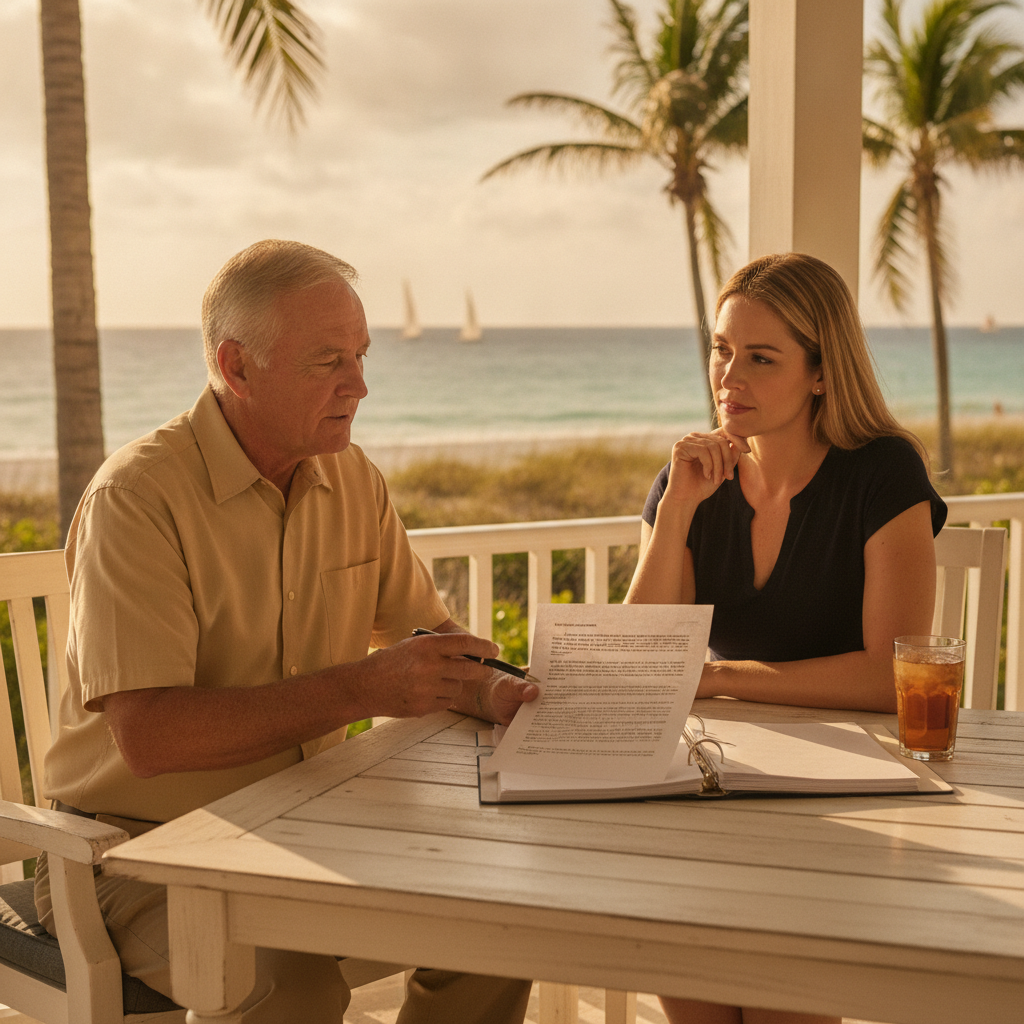
What Should Fairhope and Gulf Coast Families Know About Using a Healthcare Directive to Control Medical Decisions If They Can’t Speak for Themselves?
A healthcare directive gives you a legal voice when you no longer have a physical one. If a medical emergency, serious illness, or cognitive decline leaves you unable to communicate your wishes, this document tells doctors and hospitals exactly what treatment you want — and just as importantly, what you don’t want. For families in Fairhope, Orange Beach, and across Baldwin County, where a large and growing retiree population means these situations arise more often than people expect, having a properly prepared healthcare directive isn’t a morbid afterthought. It’s one of the most direct acts of care you can show the people who love you.
What a Healthcare Directive Actually Does
The term “healthcare directive” is an umbrella that covers two closely related documents in Alabama. The first is a living will, which states your preferences about end-of-life treatment — things like whether you want life-sustaining measures continued if you’re in a permanent vegetative state, or how aggressively you want pain to be managed. The second is a healthcare proxy, also called a durable power of attorney for healthcare, which names a trusted person to make medical decisions on your behalf when you can’t make them yourself.
These two documents work best together. A living will sets the framework; your healthcare proxy agent fills in the gaps when real-life medical situations don’t fit neatly into any checklist. Without both, your family may face a situation where they’re making life-altering decisions under pressure — possibly while disagreeing with each other — and there’s no legal document to settle the question.
Why Gulf Coast Retirees and Snowbirds Face a Distinct Set of Risks
The Gulf Coast draws retirees for good reasons — the waterfront setting, the mild winters, the pace of life. Fairhope, Daphne, and Spanish Fort have seen steady growth in their retiree populations over the last decade, and Orange Beach and Gulf Shores attract thousands of seasonal snowbirds every year. That demographic reality has a direct connection to healthcare planning.
Many snowbirds and part-time Gulf Coast residents maintain primary residences in Ohio, Michigan, Illinois, or other northern states — and that creates a real complication. Alabama recognizes its own form of advance directive, and while most states will honor out-of-state documents in an emergency, the safest approach is to have documents that are clearly valid in each state where you spend significant time. A healthcare directive drafted to Alabama’s requirements may work smoothly at Thomas Hospital in Fairhope or at the facilities near Orange Beach, but it could raise questions at a Michigan hospital if that’s where you happen to be when a health crisis strikes.
Getting this coordination right requires more than downloading a generic form. It requires understanding the specific execution requirements in Alabama — including witness and notarization rules — and thinking through the multi-state picture if you split your year between two places.
Hurricane Season and the Case for Keeping Documents Current
If you’ve lived on the Gulf Coast for any length of time, you know how quickly a hurricane season can shift priorities. Every summer, coastal Alabama families think through evacuation plans, property protections, and emergency logistics. Healthcare directives belong in that same conversation — and they’re often overlooked.
A document signed ten years ago may still be legally valid, but a lot changes in a decade. Your health changes. Your family relationships change. The person you named as your healthcare proxy may have moved, become ill themselves, or simply not be the right choice anymore. Reviewing your advance directive alongside your other estate planning documents on a regular basis — or after a major life change — keeps everything accurate and enforceable when it matters most.
What Happens Without a Healthcare Directive in Alabama
Alabama law does provide a default process for making medical decisions on behalf of an incapacitated person when no directive exists. Physicians can turn to a list of family members — starting with a spouse, then adult children, then parents, then siblings — to serve as a surrogate decision-maker. That might sound like a workable backup plan, but it has real limitations.
What if your adult children disagree about your care? What if you’re estranged from a family member who would be next in line under the statute? What if you’re unmarried and your domestic partner — the person who knows your wishes better than anyone — has no legal standing to speak for you? These are exactly the situations that a properly drafted healthcare directive prevents. You choose who speaks for you and what they’re authorized to say, rather than leaving it to a legal default that may not reflect your actual relationships or your wishes.
Choosing Your Healthcare Proxy: What to Think Through
Naming a healthcare proxy is one of the most personal decisions in the entire estate planning process. This person needs to be someone who can handle pressure, communicate clearly with medical providers, and — critically — follow your instructions even when it’s emotionally difficult for them to do so.
A few practical considerations:
- Proximity matters. If your first choice lives in another state and you spend most of your time in Foley or Fairhope, think about whether they can realistically respond quickly in an emergency.
- Name an alternate. Life changes. Your primary proxy may become unavailable, and without a backup named in the document, the decision-making authority could fall to someone you wouldn’t have chosen.
- Have the conversation. The person you name should know they’ve been named, understand your values about medical treatment, and know where the document is kept.
- Separate roles when it makes sense. In some families, the right person to manage finances under a durable power of attorney is not the same person best suited to handle medical decisions. These are separate documents, and they don’t have to name the same person.
Why Generic Online Templates Often Fall Short
There’s no shortage of free advance directive forms online, and Alabama’s State Bar and the Alabama Department of Public Health have published their own statutory form. These resources have value — but they’re a starting point, not a finish line. A statutory form can’t account for your specific family dynamics, your particular health concerns, your religious or personal values about treatment, or the multi-state complexity that affects so many Gulf Coast residents.
There’s also an execution problem. Alabama requires specific witness and notarization rules for a healthcare directive to be legally valid. An improperly executed document may be rejected by a healthcare provider at exactly the moment it’s most needed. Working with a local attorney who understands both Alabama law and the specific situation of Gulf Coast families is the straightforward way to get this right the first time.
Frequently Asked Questions: Healthcare Directives on the Gulf Coast
Does Alabama require a healthcare directive to be notarized?
Yes. Under Alabama law, an advance directive must be signed in the presence of two adult witnesses and a notary public. The witnesses cannot be your healthcare proxy, your attending physician, or anyone who would benefit from your estate. Skipping these steps can invalidate the document entirely.
Can my Alabama healthcare directive be used if I’m hospitalized in another state?
Most states will recognize a valid out-of-state advance directive in an emergency, but there’s no guarantee. If you spend meaningful time in another state — as many Gulf Coast snowbirds do — it’s worth discussing with an attorney whether you should have documents prepared under the laws of both states.
How is a healthcare directive different from a do-not-resuscitate (DNR) order?
A healthcare directive is an estate planning document you prepare in advance and keep with your personal records. A DNR order is a physician’s medical order that travels with your medical chart and is intended to guide emergency responders and hospital staff in the moment. They serve complementary but distinct functions — your directive can express your preference for no resuscitation, which a physician can then translate into a formal DNR order.
What if I change my mind after signing a healthcare directive?
You can revoke or amend your healthcare directive at any time, as long as you have the mental capacity to do so. Alabama law allows revocation in writing, verbally in the presence of a witness, or by physically destroying the document. After any major health event or life change, it’s a good idea to review the document and update it if your wishes have shifted.
Does my healthcare proxy have authority over all medical decisions?
Your proxy’s authority is generally limited to situations where you lack capacity to make decisions yourself. The scope of their authority depends on how the document is drafted — which is another reason a template may not be enough. A well-drafted directive can be specific about what kinds of decisions your proxy can and cannot make, and under what circumstances their authority kicks in.
Take the Step That Protects Your Voice
A healthcare directive is not a document you prepare because you expect the worst. It’s a document you prepare because you’ve thought carefully about what matters to you and you want those wishes honored — regardless of what life brings. For families in Fairhope, Mobile, and across the Gulf Coast, it’s one of the most practical and personal planning decisions you can make.
At The Bales Lawfirm, we help Orange Beach and Gulf Coast families build estate plans that work in the real world — including healthcare directives, powers of attorney, and the full range of documents that make sure your wishes are clear and legally enforceable. Whether you’re a year-round resident or a seasonal visitor, we can work through the specifics of your situation with you. Contact us today to schedule a consultation.