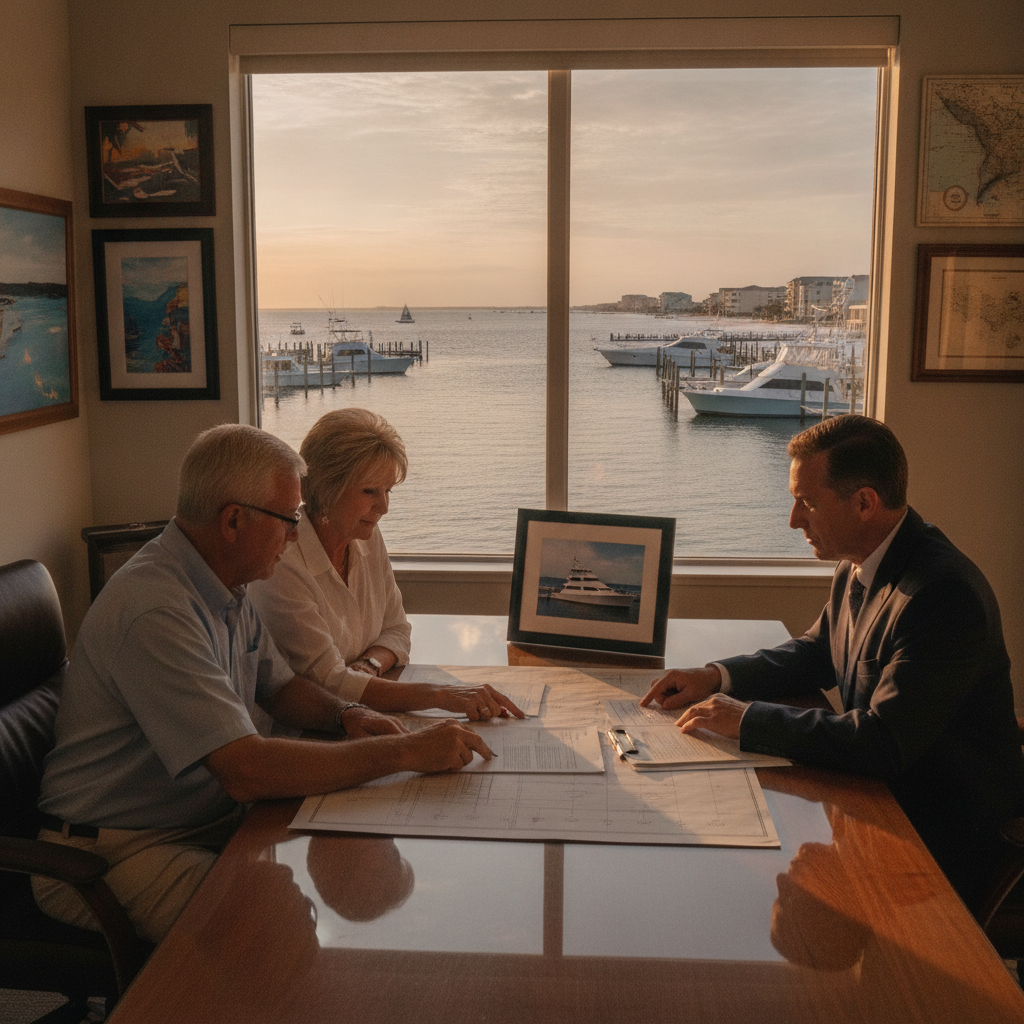
What Should Orange Beach and Gulf Coast Families Know About Transferring a Boat or Watercraft Through Their Estate Plan?
If you own a boat in Orange Beach, Gulf Shores, or anywhere along the Gulf Coast, there’s a good chance it’s one of your most prized possessions — and one of the most overlooked assets in your estate plan. A vessel sitting in Terry Cove or docked at a slip near Cotton Bayou can be worth tens of thousands or even hundreds of thousands of dollars, yet families are often surprised to discover that transferring a boat after someone dies is anything but simple. Depending on how title is held, what registration jurisdiction applies, and whether any loans are attached, a boat can end up stuck in probate just like a piece of real estate — holding up distribution for months while the family waits.
The good news is that with the right planning, transferring a watercraft to your heirs can be clean, fast, and straightforward. Here’s what Gulf Coast boat owners need to understand before it becomes their family’s problem.
Why Boats Are Different From Other Assets — And Why That Creates Estate Planning Problems
Most people think carefully about what happens to their home, their retirement accounts, and their bank accounts when they die. Boats rarely get the same attention — even when they’re worth more than a vehicle and require just as much paperwork to transfer.
A boat is titled personal property in Alabama, which means it goes through the estate just like any other asset without a designated beneficiary or joint ownership structure. If your vessel is titled solely in your name and you pass away, your family may need to open a probate proceeding in Baldwin County (or wherever you’re domiciled) to get legal authority to transfer or sell it. That process can take anywhere from several months to over a year, and it involves court filings, creditor notification periods, and legal fees that could have been avoided entirely.
There’s another layer of complexity if you’re a snowbird. Many Gulf Coast boat owners spend winters in Orange Beach and summers further north, and some vessels are registered in a state other than Alabama. If your boat is documented through the U.S. Coast Guard — which is common for larger vessels — the transfer process after death involves federal documentation rules, not just Alabama state procedures. That’s a detail that generic estate planning checklists rarely address.
The Smartest Ways to Transfer a Boat to Your Heirs Without Probate
There are a few different strategies for keeping a boat out of probate, and the right one depends on the vessel’s value, how it’s currently titled, and what you want to happen to it when you’re gone.
Transfer the Vessel Into a Revocable Living Trust
One of the most effective ways to handle a boat is to transfer title into a revocable living trust. When the trust owns the vessel, it passes directly to your named beneficiaries at your death without court involvement. Your successor trustee handles the paperwork, and your heirs get the boat — or the proceeds from its sale — efficiently and privately.
For Coast Guard-documented vessels, the trust must be named as the owner in the documentation records, and the trustee’s authority to act on behalf of the trust needs to be clear. This is exactly the kind of detail that gets missed when people use online DIY tools or templates that weren’t drafted with maritime asset considerations in mind. An attorney familiar with Gulf Coast estate planning will know to address this when drafting your trust documents and coordinating the title transfer. You can learn more about how revocable living trusts work as part of a broader estate plan on our wills and trusts page.
Add a Joint Owner With Right of Survivorship
If you want a spouse or adult child to automatically receive the boat without probate, adding them as a joint owner with right of survivorship on the title is another option. When one owner dies, title passes automatically to the survivor. This works well in straightforward situations, but it comes with trade-offs: adding someone as a co-owner now means they have legal rights to the vessel today, not just when you die. That can create complications if relationships change, if the co-owner has creditor issues, or if you later want to sell the boat without their consent.
Designate a Beneficiary Through Your Will — But Understand the Limitations
You can absolutely leave a boat to someone through your will. The catch is that a will-based transfer still goes through probate. For a simple estate with no other complications, that may be acceptable. But for families who own waterfront property, vacation rental income, and other significant assets in Baldwin County or along the coast, having multiple assets in probate simultaneously can create significant delays and cost. A more comprehensive plan — centered on a trust or joint ownership — typically serves coastal families better.
What Happens if You Have a Loan on the Vessel?
This is a question that doesn’t come up in most estate planning conversations, but it matters. If your boat is financed, the lender has a security interest in it, and your estate will need to deal with that loan before title can be freely transferred. Whether your heirs assume the loan, pay it off, or choose to sell the vessel, the lender’s interest has to be resolved first — and that process is easier when the estate plan anticipated it.
If you’re planning to transfer a financed vessel into a trust, your lender’s consent may also be required. This is worth confirming before you assume the trust approach will work without any additional steps.
The Gap Most Local Estate Plans Miss: Coordinating Vessel Registration Across State Lines
Here’s a content area where many Gulf Coast estate planning resources fall short: what happens when a boat owner is a snowbird who registers or primarily uses a vessel in a different state? If you split time between Orange Beach and a home in Ohio or Tennessee, and your boat is registered in your home state but docked here seasonally, your estate plan needs to address the registration jurisdiction — not just Alabama probate law.
Federally documented vessels add another layer. A Coast Guard-documented vessel doesn’t go through state registration in the traditional sense — the documentation must be updated with the National Vessel Documentation Center after the owner’s death. Families who don’t know this often delay the process unnecessarily or encounter unexpected requirements when trying to sell or retitle the boat.
At The Bales Lawfirm, we work with Gulf Coast families — including seasonal and snowbird owners — to make sure their estate plan accounts for the full picture of what they own, not just the obvious assets. Our estate planning services are built around the realities of coastal Alabama ownership, including watercraft, vacation rental properties, and multi-state asset situations.
Asset Protection Considerations for High-Value Vessels
If you own a boat worth $100,000 or more, asset protection is worth thinking about beyond just the estate planning angle. A vessel can be exposed to liability claims — whether from a boating accident, a charter arrangement gone wrong, or a guest injury. Holding a high-value boat in an LLC or other protective structure, combined with appropriate insurance, can shield your other assets from a claim that arises from use of the vessel. This is a planning conversation worth having alongside your estate plan, not separately from it.
Frequently Asked Questions: Boat and Watercraft Estate Planning in Orange Beach and Along the Gulf Coast
Does a boat have to go through probate in Alabama if there’s no will?
Yes. If a vessel is titled solely in the deceased owner’s name and there is no beneficiary designation or survivorship structure in place, it becomes part of the probate estate. Alabama’s intestacy laws will determine who receives it.
Can I put a Coast Guard-documented vessel into a living trust?
Yes, but it requires working with the National Vessel Documentation Center to update the documentation records to reflect the trust as owner. This is an important step that is easy to miss without experienced legal guidance.
What if the boat is registered in another state but kept in Gulf Shores or Orange Beach?
The registration jurisdiction matters for the title transfer process after death. If the vessel is registered out of state, the estate may need to follow that state’s procedures — or coordinate with Alabama — depending on the circumstances. This is especially common for snowbird owners along the Gulf Coast.
Is boat insurance enough to protect my family if something goes wrong on the water?
Insurance is essential but doesn’t replace legal planning. Structuring ownership carefully — through a trust, LLC, or joint ownership — works alongside insurance to address both liability exposure and what happens to the vessel when you die.
Should a boat be listed separately in my estate plan or included in a general trust?
It should be specifically addressed. A general trust can own a vessel, but the title transfer into the trust must be completed during your lifetime for the trust to control what happens at death. Simply naming a boat in a will or trust document without completing the retitling step leaves the vessel subject to probate anyway.
Talk to The Bales Lawfirm About Your Watercraft and Your Estate Plan
A boat is more than a recreational purchase along the Gulf Coast — for many families in Orange Beach, Fairhope, Daphne, and Perdido Key, it’s a centerpiece of life here and a meaningful asset to pass on. Making sure it actually gets to the right person, without a court process standing in the way, takes deliberate planning. The Bales Lawfirm works with Gulf Coast families, retirees, and seasonal property owners to build estate plans that account for the full picture — watercraft included.
If you have a vessel and want to make sure it’s handled the right way in your estate plan, we’re here to help. Contact The Bales Lawfirm to schedule a consultation and get straightforward answers about what your plan should include.