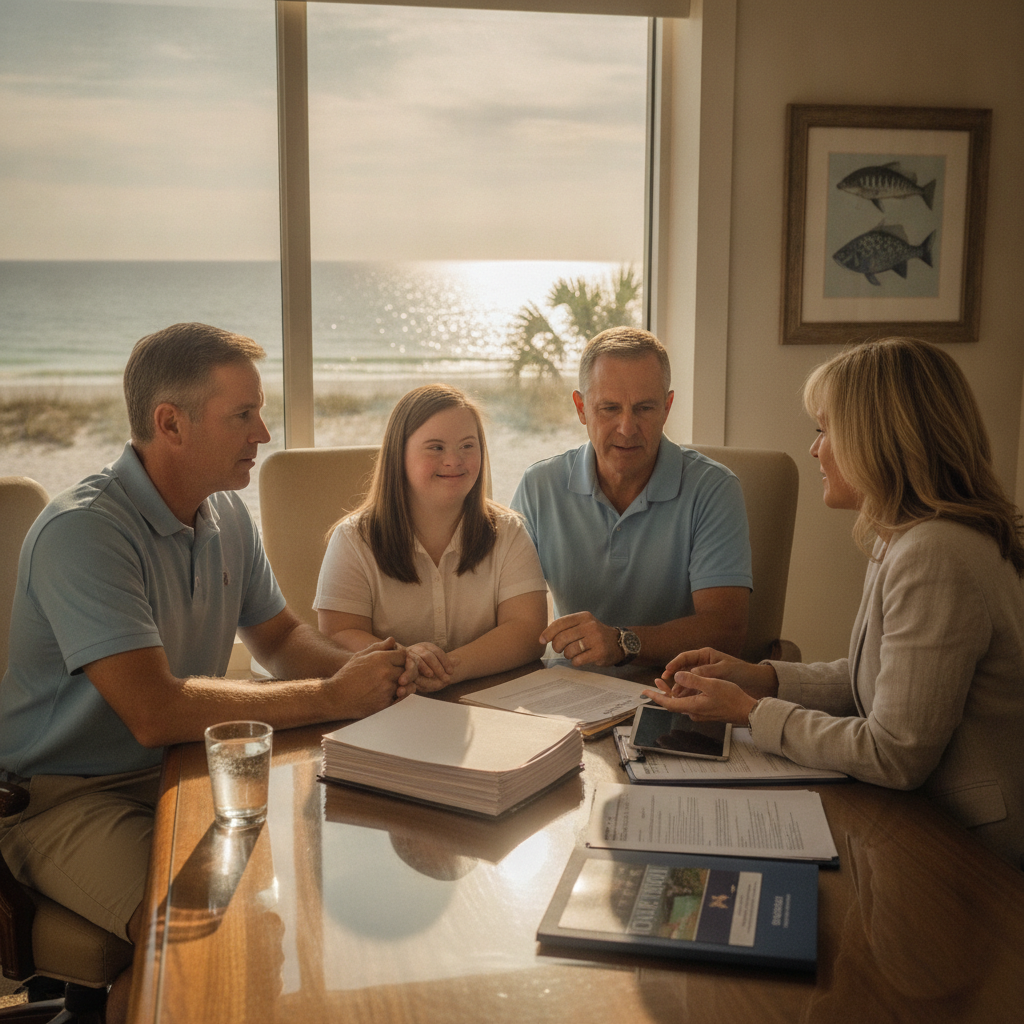
What Should Orange Beach and Gulf Coast Families Know About Using a Special Needs Trust to Protect a Disabled Beneficiary’s Government Benefits?
If you have a child, grandchild, or sibling with a disability, one of the most important — and most easily overlooked — decisions in your estate plan is how you leave assets to them. Leaving money or property directly through a will or as a named beneficiary sounds straightforward, but for someone who receives Supplemental Security Income (SSI) or Medicaid, an inheritance above the program’s asset limits can immediately disqualify them from the benefits they depend on to live. In Orange Beach and across Baldwin County, families dealing with this situation have a clear legal solution: a properly drafted Special Needs Trust.
Why a Direct Inheritance Can Do More Harm Than Good
SSI and Medicaid are means-tested programs, meaning eligibility depends on a person having limited income and assets — often no more than $2,000 in countable resources for an individual. When a disabled beneficiary receives an inheritance outright, even a modest one, it can push them over that threshold. Their benefits get suspended or terminated until they’ve spent back down to the limit. They may then have to navigate a complicated reinstatement process that can take months and leave gaps in healthcare coverage and monthly income during that time.
This isn’t a hypothetical edge case. It happens regularly, and it happens to well-intentioned families who simply didn’t have the right structure in place. A Special Needs Trust — sometimes called a Supplemental Needs Trust — is designed specifically to hold assets for the benefit of a disabled person without those assets counting toward their program eligibility. The trust can pay for things that government benefits don’t cover: education, transportation, technology, recreation, personal care items, and other quality-of-life expenses — all without affecting Medicaid or SSI.
How a Special Needs Trust Actually Works
A Special Needs Trust is a legal entity that holds and manages assets on behalf of a disabled beneficiary. You, as the person creating the trust (the grantor), transfer assets into it. A trustee — which could be a family member, a professional trustee, or a nonprofit trust company — manages those assets and makes distributions according to the terms you’ve set.
The key is that the beneficiary never has direct control over the funds. The trustee makes disbursements for approved supplemental expenses. Because the beneficiary doesn’t legally own or control the assets, they don’t count as resources for SSI or Medicaid purposes under federal law and Alabama regulations.
There are a few different types of Special Needs Trusts, and which one you need depends on where the assets are coming from:
- Third-Party Special Needs Trusts are funded with assets belonging to someone other than the beneficiary — typically parents, grandparents, or other family members. These trusts do not require a Medicaid payback provision, meaning whatever is left in the trust when the beneficiary dies can pass to other heirs.
- First-Party (Self-Settled) Special Needs Trusts are funded with assets that already belong to the disabled person — for example, a personal injury settlement or an inheritance they received before a trust was in place. These trusts do require a Medicaid payback provision under federal law.
- Pooled Trusts are managed by nonprofit organizations that pool the assets of multiple beneficiaries for investment purposes while maintaining individual accounts for each. These can be a practical option when the amount of assets doesn’t justify the cost of a standalone trust.
For most Gulf Coast families doing proactive estate planning, a third-party Special Needs Trust is the appropriate tool — and the one that offers the most flexibility.
What This Means for Orange Beach and Gulf Coast Families Specifically
Families along the Gulf Coast face a planning reality that makes Special Needs Trusts even more relevant: the value of real property here has risen significantly over the past decade. Waterfront lots, vacation-rental condos, and residential properties in areas like Gulf Shores, Foley, and Fairhope have appreciated considerably. When a parent with a disabled adult child dies and leaves behind real estate or financial accounts, the inherited value can easily exceed SSI and Medicaid thresholds — even if the family doesn’t consider themselves wealthy.
Snowbirds and seasonal residents who own Gulf Coast property and have a disabled beneficiary back home — in Ohio, Michigan, or elsewhere — need to think carefully about how Alabama property will pass under their estate plan. If that property is left outright to a disabled child in another state, the benefit disruption can happen in two different state Medicaid systems, creating complications that are difficult to unwind.
A properly structured trust can hold that Gulf Coast property, manage any rental income it produces, and distribute funds to support the beneficiary’s care and quality of life — without triggering a Medicaid or SSI eligibility review.
Choosing a Trustee for a Special Needs Trust
Trustee selection is one of the most consequential decisions in setting up a Special Needs Trust, and it’s an area where many families don’t give enough thought. A trustee managing a Special Needs Trust needs to understand what types of distributions are permissible without affecting benefits, keep detailed records, and stay current with changes in federal and state benefit program rules.
A family member can serve as trustee, but they need to be willing to take on an ongoing administrative responsibility — often for decades. They also need to be financially literate and emotionally capable of making objective decisions when family dynamics are involved. If no suitable family member is available, a professional trustee or trust company is worth considering, particularly for larger trusts or complex situations.
Some families name a family trustee with a professional co-trustee or successor trustee as a backup. Others name a trusted sibling with instructions to consult a special needs attorney before making any distributions. Whatever structure you choose, it needs to be built into the trust document from the start. An experienced estate planning attorney can help you think through these tradeoffs in the context of your family’s specific situation.
A Gap Most Local Competitors Don’t Address: Coordinating Benefits Across State Lines
One area that tends to get little attention from general-practice attorneys — and is almost entirely missing from the content published by many local firms — is how a Special Needs Trust should be structured when the disabled beneficiary lives in a different state than the trust grantor. This is a real-world challenge for Gulf Coast families, particularly those who own property in Alabama but have adult disabled children living elsewhere.
SSI is a federal program with consistent rules nationally, but Medicaid is administered by each state with significant variation in eligibility rules, covered services, and enforcement practices. A Special Needs Trust drafted by an Alabama attorney needs to be constructed in a way that complies with both Alabama law and the rules of the state where the beneficiary lives. If it isn’t, the trust could still disqualify the beneficiary from their home state’s Medicaid program even if it’s properly structured under Alabama law.
This is an area where working with a dedicated estate planning attorney — rather than a generalist or a DIY online service — makes a meaningful difference. The specifics of multi-state benefit coordination require careful drafting and, in some cases, consultation with a special needs attorney in the beneficiary’s home state.
Frequently Asked Questions
Can I just leave money to a sibling with instructions to use it for my disabled child?
This informal arrangement — sometimes called a “letter of intent” or an informal side agreement — is legally risky. The sibling who receives the inheritance owns it outright and has no legal obligation to use it for your disabled child. It can also be seized by the sibling’s creditors or affected by divorce. A properly drafted Special Needs Trust is the only way to legally protect the funds and ensure they’re used as intended.
Does setting up a Special Needs Trust require going to court in Alabama?
A third-party Special Needs Trust created as part of your estate plan typically does not require court involvement. It’s drafted by your attorney and becomes effective when signed. First-party (self-settled) trusts may require court approval in some circumstances depending on the beneficiary’s age and situation.
What can a Special Needs Trust pay for without affecting SSI or Medicaid?
Allowable distributions vary by program and trustee discretion, but generally include things like education, transportation, technology and communication devices, recreational activities, medical expenses not covered by Medicaid, personal care items, and travel. The trustee should avoid making cash distributions directly to the beneficiary or paying for food or shelter, as those can reduce SSI benefits.
Can a Special Needs Trust hold a vacation rental property in Orange Beach or Gulf Shores?
Yes, a Special Needs Trust can own real property, including a vacation rental. Rental income would be managed by the trustee and disbursed according to trust terms. How rental income affects the beneficiary’s SSI benefits depends on the specifics, so proper drafting and trustee guidance are essential in these situations.
When should a Special Needs Trust be set up — before or after the parent dies?
Ideally, the trust is drafted and in place as part of your estate plan before you die, so that your will or revocable living trust pours assets into it at your death. Waiting until after a parent dies to address this — particularly if assets have already passed to a disabled beneficiary — is far more complicated and may require court involvement to correct.
Talk to The Bales Lawfirm About Planning for a Disabled Beneficiary
Planning for a family member with a disability takes more than a standard will. It takes a trust structure built to work alongside federal and state benefit programs — and drafted by someone who understands both Alabama law and the real-world implications for families on the Gulf Coast. Whether you own property in Mobile, are a seasonal resident with ties to another state, or are simply doing your estate plan for the first time, The Bales Lawfirm can help you build something that actually works.
Reach out through our contact page to schedule a consultation and talk through your family’s situation. We’ll help you understand your options in plain language and build a plan that protects the people who matter most to you.