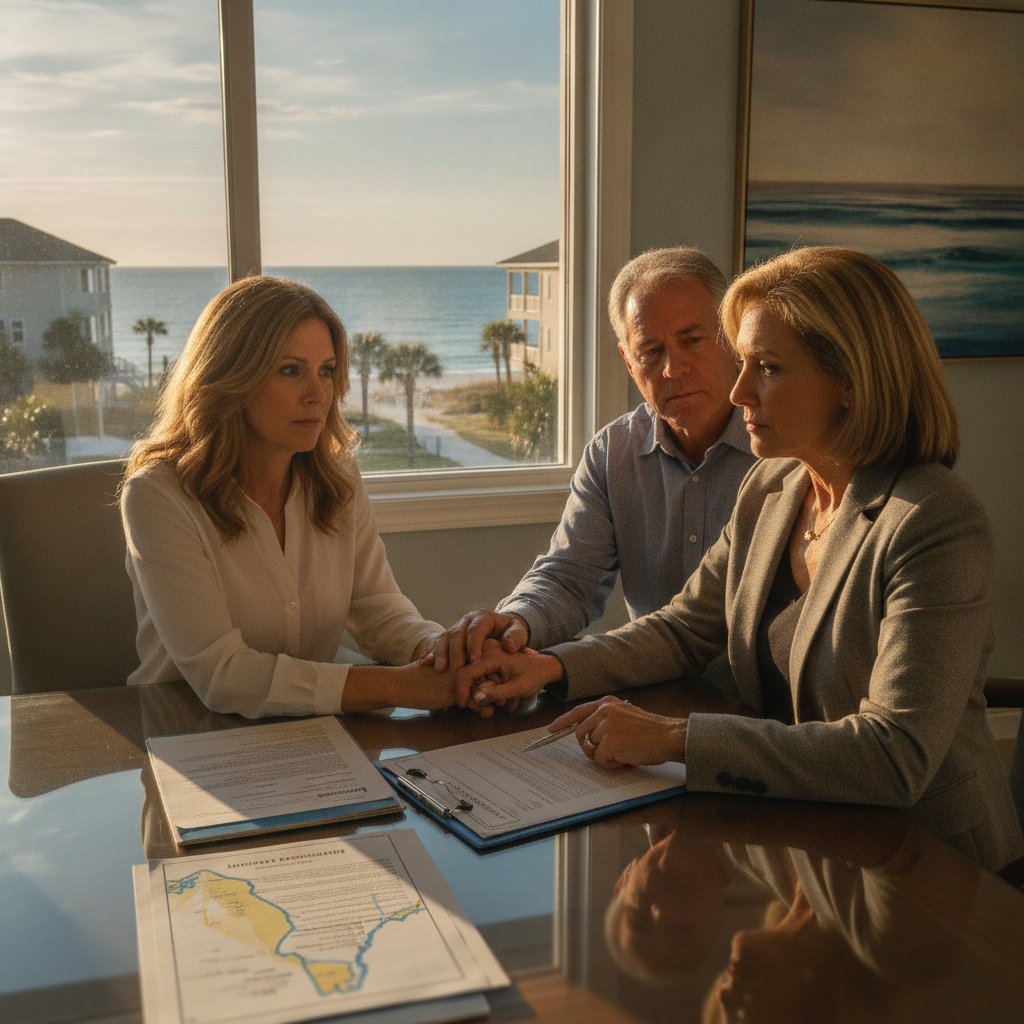
What Happens to a Waterfront Property in Orange Beach When There Is No Will?
If you own waterfront or vacation-rental property in Orange Beach and you die without a will, the State of Alabama steps in and makes the inheritance decisions for you. Alabama’s intestate succession laws — not your wishes, not your family’s conversations, not anything you intended — determine who gets the property, in what shares, and under what conditions. For a piece of real estate that may be worth well into seven figures on today’s Gulf Coast market, that’s a significant amount of control to hand over to a default legal formula.
Here’s what that actually looks like in practice, why it’s especially complicated for coastal property owners, and what you can do to make sure your property ends up where you want it to go.
How Alabama’s Intestate Laws Divide Your Property
When someone dies without a valid will in Alabama, their estate is distributed according to Alabama Code Title 43. The result depends entirely on who survives you — and the outcomes aren’t always intuitive.
- Married with children: Your spouse does not automatically get everything. Alabama law splits the estate between your surviving spouse and your children. The surviving spouse receives the first $50,000 of the estate’s value plus half of the remainder. Your children divide the other half equally. If your Orange Beach condo or bayfront home is worth $900,000, that math matters — a lot.
- Married, no children: Your spouse inherits everything, but only if both of your parents are deceased. If a parent survives you, they share the estate with your spouse.
- Unmarried with children: Your children split everything equally — including minor children, who cannot legally hold real property and will require a court-appointed conservator to manage their share.
- No spouse, no children: The estate passes up to your parents, then to siblings, then to more distant relatives in order of legal priority.
None of these scenarios account for estranged relatives, blended families, or the practical reality that multiple heirs owning fractional shares of a single piece of coastal real estate can create serious conflict — and serious legal costs.
Why Waterfront and Vacation Rental Property Is Especially Complicated Without a Plan
A piece of residential property inland is one thing. A waterfront home in Orange Beach, a Gulf-front condo in Gulf Shores, or a short-term rental property generating income near Perdido Key carries a different set of complications when it passes through intestate succession.
First, the value. Baldwin County property values — particularly anything on or near the water — have climbed sharply over the past decade. A property that seemed modest ten years ago may now represent the majority of an estate’s total value. That makes every distribution decision higher-stakes and more likely to draw disagreement among heirs.
Second, co-ownership. When two or more heirs inherit a property together under intestate succession, each owns a fractional undivided interest. They all have equal rights to use and occupy the property — but no single heir can sell, rent, or substantially modify it without the others’ agreement. If heirs can’t agree, any one of them can file a partition action in court, which can force a sale of the property, often at below-market value, to resolve the dispute. That’s a difficult outcome for a vacation home that’s been in a family for decades.
Third, ongoing income and expenses. If the property is a vacation rental generating income through platforms like Vrbo or Airbnb, the estate must still manage bookings, maintenance costs, insurance, and tax obligations while probate is pending — sometimes for a year or more. Without clear authority designated in advance, this creates practical and legal headaches for everyone involved. A well-structured estate plan solves this before it becomes a problem.
The Probate Process for Real Property in Baldwin County
Real estate cannot transfer on its own after death the way a bank account with a beneficiary designation might. It has to go through the legal process — either through a will probated in Baldwin County Probate Court, or through intestate administration if there is no will. Either way, the property is temporarily frozen until the court process resolves the estate.
Intestate estates in Alabama typically take anywhere from nine months to two years to fully administer, depending on complexity, family cooperation, and court scheduling. During that time, heirs often cannot refinance, sell, or make major decisions about the property without court approval. For a vacation rental generating seasonal income, this delay has real financial consequences.
Families in Foley, Fairhope, Daphne, and across Baldwin County frequently discover — after the fact — that the absence of even a basic will has turned a straightforward inheritance into a drawn-out legal process. The good news is that with the right structure in place, probate for real property can often be avoided entirely.
The Gap Most Local Competitors Miss: What Snowbirds and Part-Time Owners Need to Know
Many estate planning resources — including those from local competitors — focus on full-time Alabama residents. But a significant portion of Orange Beach and Ono Island property owners are seasonal residents, snowbirds, or out-of-state investors who own a Gulf Coast property alongside a primary home in Ohio, Michigan, Illinois, or elsewhere.
This creates a multi-state problem. If you’re a Florida or Tennessee resident who owns a condo in Orange Beach, your primary estate plan may be governed by your home state’s laws — but your Alabama real property will still need to pass through Alabama probate separately unless it’s properly titled or placed in a trust. That means two probate proceedings, in two states, simultaneously.
A revocable living trust that holds title to your Alabama property solves this. When the trust owns the property — not you personally — there’s no need for Alabama probate at all. The successor trustee you name takes over management and distribution without court involvement. For snowbirds and seasonal owners, this is one of the most practical and underused planning tools available.
What a Basic Estate Plan Actually Gets You Here
You don’t need a complicated trust structure to protect a straightforward situation. But you do need something. At minimum, a properly executed Alabama will makes sure your waterfront property goes to the person you choose, in the way you intend, without the default formula overriding your wishes.
Beyond a will, many coastal property owners benefit from:
- A revocable living trust to hold title to Alabama real estate and avoid probate entirely
- A durable power of attorney so someone you trust can manage property decisions if you’re incapacitated — particularly relevant during hurricane season when you may be away and fast decisions are needed
- A healthcare directive, so your medical wishes are documented regardless of where you’re located when a health crisis occurs
- Clear beneficiary designations on any financial accounts tied to the property or its income
For blended families — which are common among the retirees and remarried couples who relocate to the Gulf Coast — the planning gets more nuanced. Prenuptial and postnuptial agreements can work alongside an estate plan to protect property brought into a marriage while still providing for a current spouse.
Frequently Asked Questions
Can my family just transfer my Orange Beach property without going to court if I die without a will?
Generally, no. Real property titled solely in your name requires a legal process to transfer after death. Without a will or a trust holding title to the property, your heirs will need to open an intestate estate in Baldwin County Probate Court to establish clear title before they can sell, refinance, or otherwise deal with the property.
What if my children can’t agree on what to do with the property?
When multiple heirs co-own real estate and can’t agree, any one of them can file a partition action in court. The court can order the property sold and the proceeds divided. This is a common and unfortunate outcome for inherited vacation homes. A will or trust that clearly designates what should happen — or gives one person authority to make decisions — prevents this outcome.
I own property in Orange Beach but I live in another state. Do I need an Alabama will?
You need an estate plan that specifically addresses your Alabama property. A will valid in your home state may be recognized in Alabama, but your Alabama real estate will still require separate Alabama probate proceedings unless it’s held in a trust or otherwise structured to avoid probate. A revocable living trust is usually the most efficient solution for out-of-state property owners.
Does adding someone to my deed solve the problem?
It can — but it creates new ones. Adding a child or other person as a co-owner means you’ve made a gift of partial ownership that may have tax implications, and it exposes the property to that co-owner’s creditors, divorces, or judgments. It’s a blunt instrument for a problem that has cleaner solutions through proper estate planning.
How long does intestate probate take for real property in Baldwin County?
It depends on the estate’s complexity and whether all heirs cooperate, but most intestate estates involving real property take between nine months and two years to fully administer. During that time, the property is generally not freely transferable, and decisions about the property require court approval or agreement from all heirs.
Get Clear Answers About Your Orange Beach Property
If you own waterfront, vacation-rental, or any real property along the Gulf Coast and you haven’t put a plan in place, you’re leaving a significant decision to a legal formula that doesn’t know your family, your intentions, or what that property means to you. The Bales Lawfirm works with property owners across Orange Beach, Baldwin County, and the surrounding Gulf Coast communities to build practical, clearly structured estate plans that keep real estate out of probate and in the right hands.
Whether you’re a full-time resident, a seasonal snowbird, or an out-of-state investor with a presence on the Gulf Coast, we can help you figure out the right structure for your situation. Reach out to schedule a consultation — and let’s make sure your property ends up exactly where you intend.